Skin Cancer Reconstruction

Skin Cancer Reconstruction

Skin Cancer Reconstruction, Mohs' Surgery Repair:
Dr Khosh specializes in facial reconstruction following skin cancer removal. Currently, Mohs' micrographic surgery is the accepted technique for removal of majority of skin cancers on the face. Dr Khosh works closely with Moh's dermatologist-surgeons in coordinating repair of facial defects. Various techniques like skin grafts, skin flaps, or skin and muscle flaps can be used in this endeavor. During the consultation process, Dr Khosh reviews various options for reconstruction and discusses the benefits and limitations of each proposed treatment. In most cases, the repair can be performed under local anesthesia in our offices. Occasionally, skin cancer reconstruction needs to be done in the operating room, where sedation or general anesthesia can be offered. In the following sections, site-specific facial defects will be discussed, along with representative examples of repairs performed by Dr Khosh.
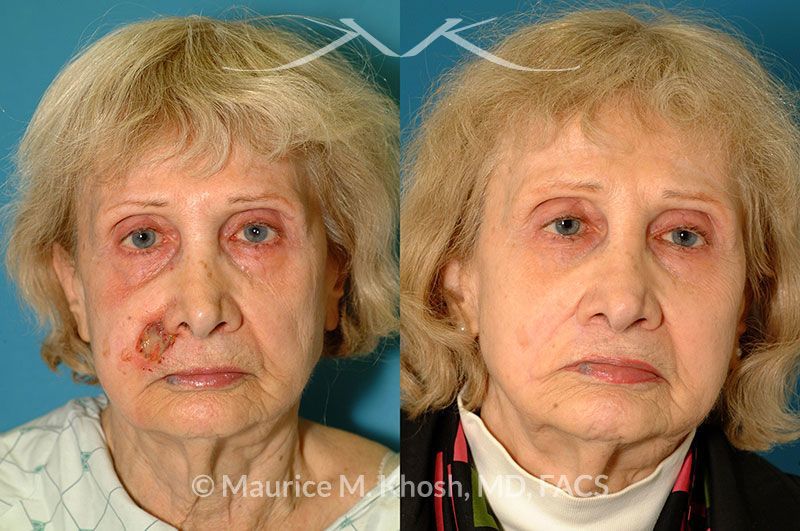
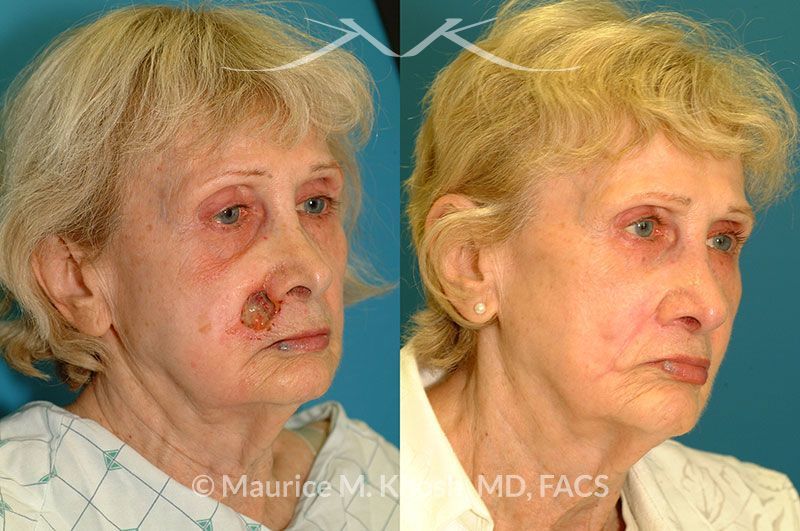
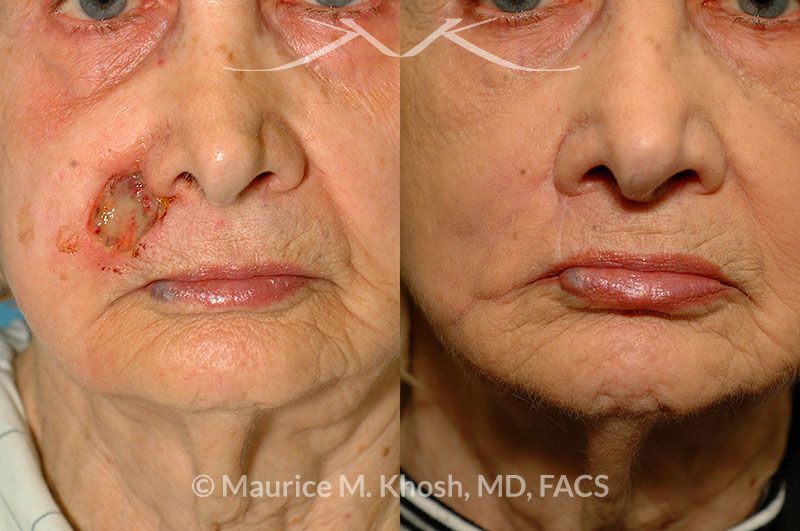
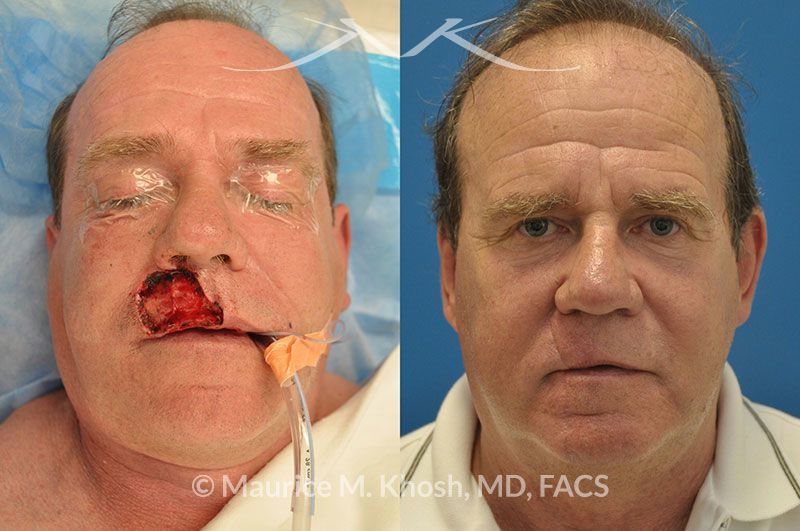
Lip Reconstuction, Lip Repair:

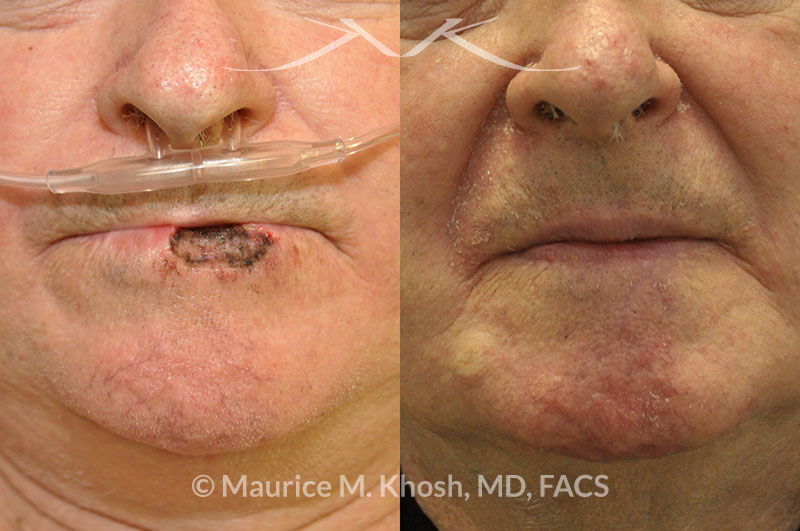
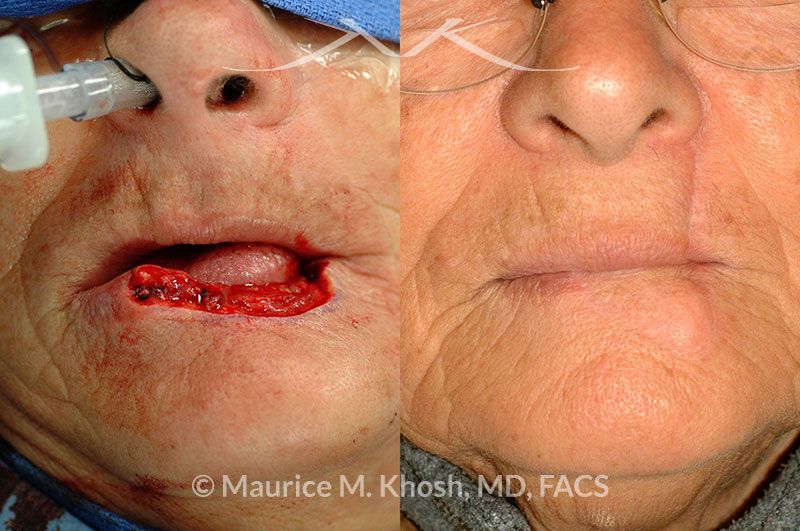
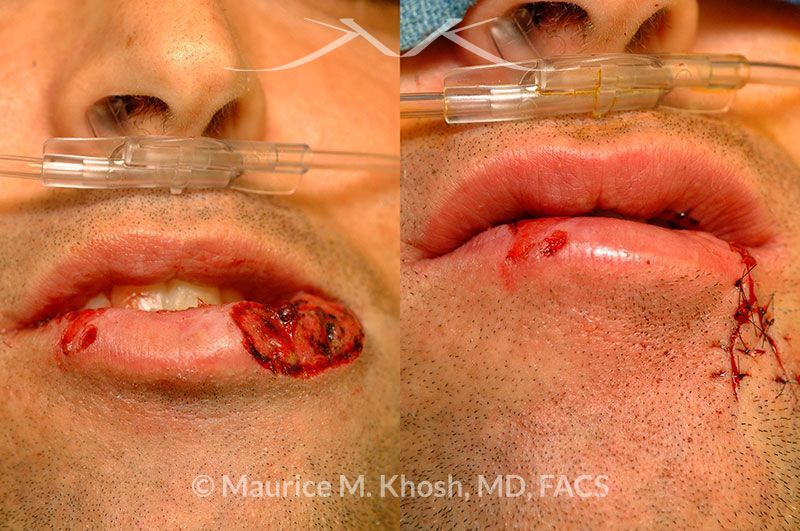
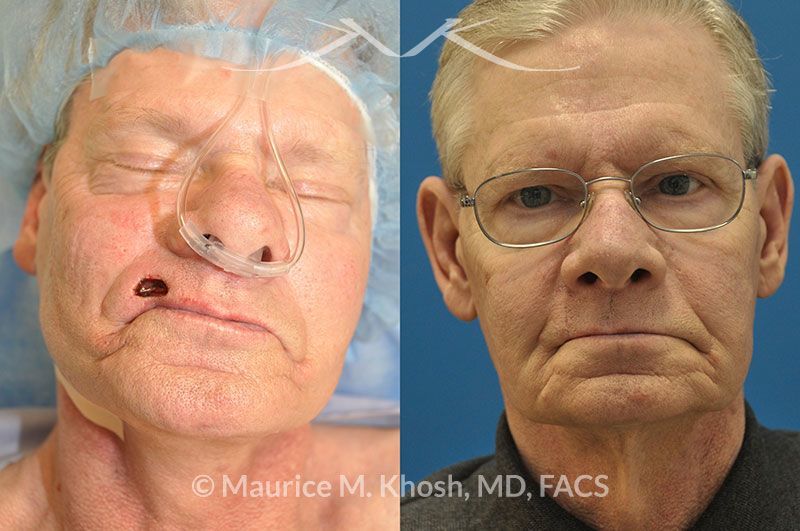
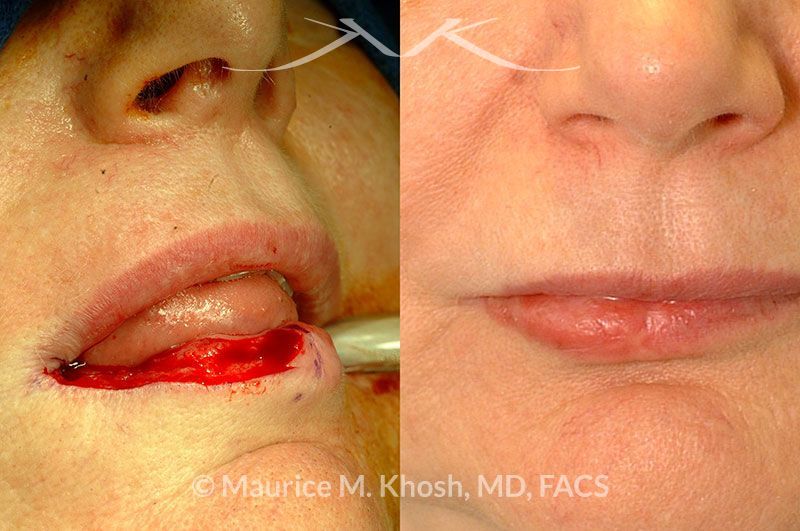
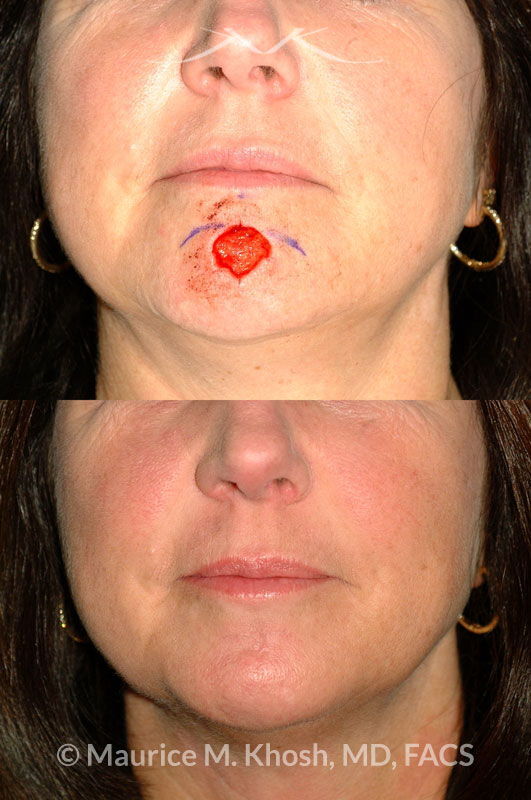
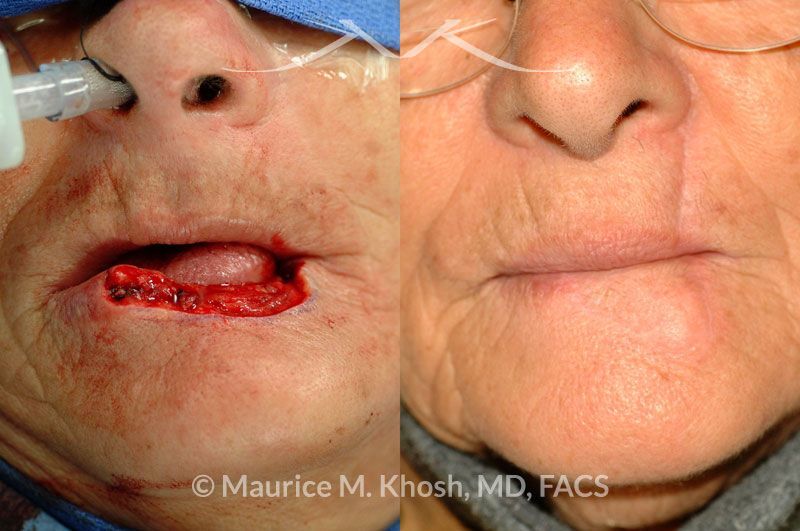
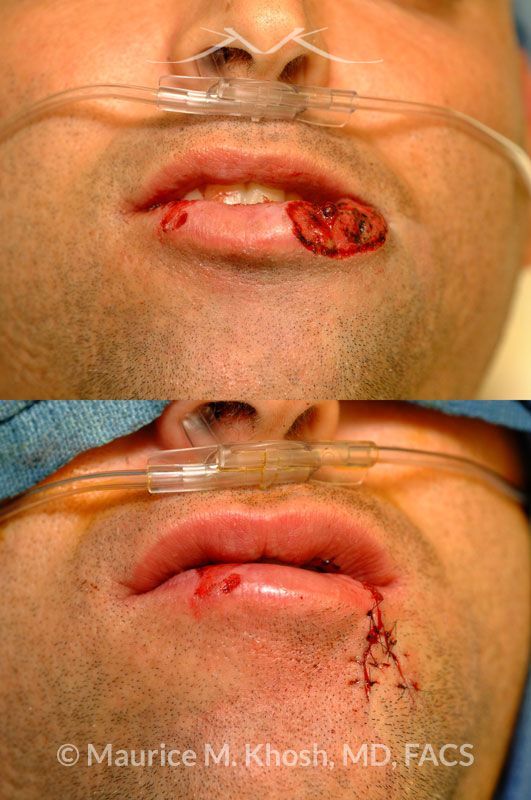
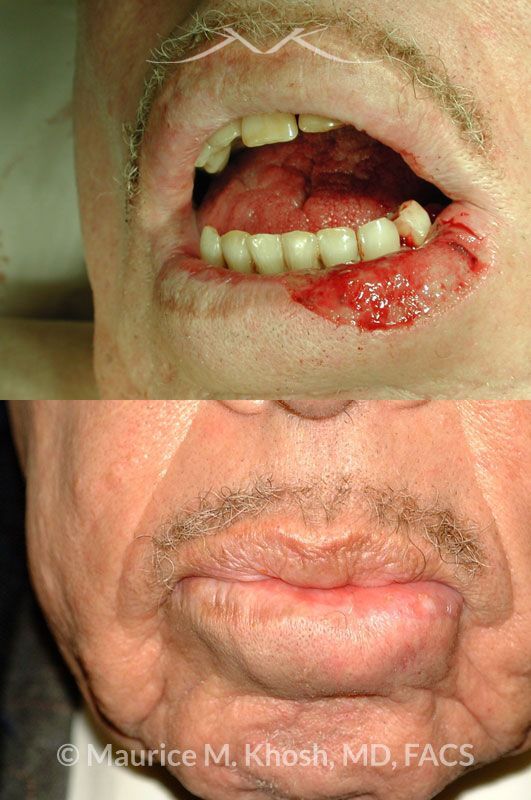
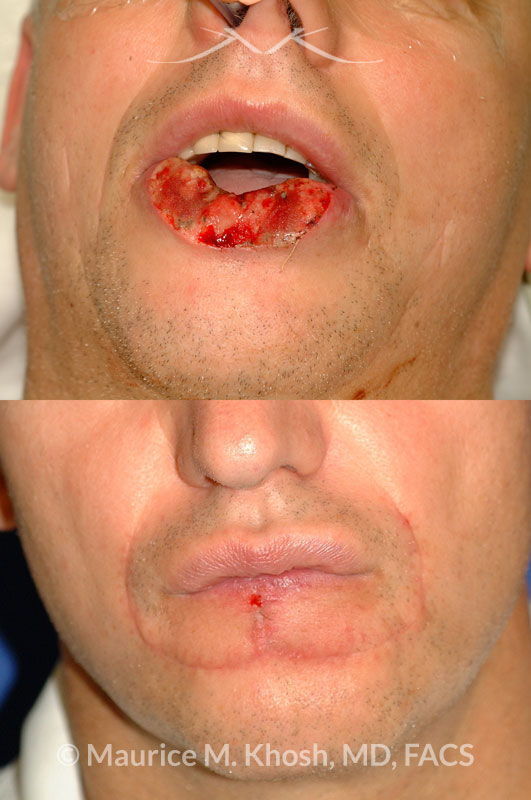
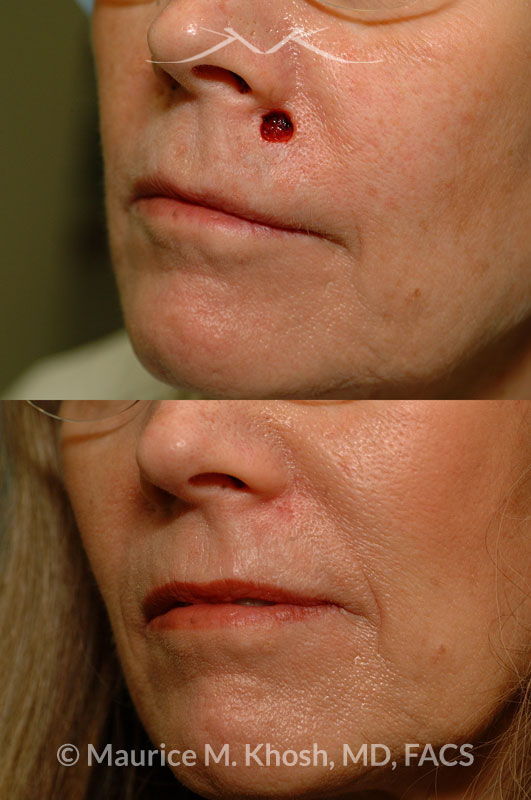
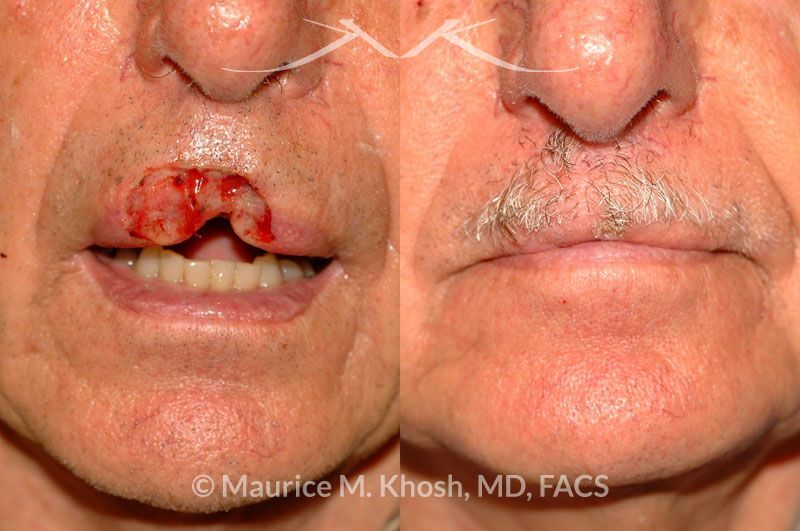
The lips are one of the most expressive parts of the face. The lips express happiness, sorrow, and all emotions in between. The lips also serve the important function of sealing the oral cavity while eating or drinking. As such, surgical repair of lip defects must repair both function and form.

Basal cell carcinoma and squamous cell carcinoma can involve the lip. Once the cancer is removed, lip repair is dictated by the size and location of the defect. When the lip defect affects the skin only, adjacent skin transfer will allow repair of the deficit. In cases where the red lip is lost or the defect extends into the oral cavity, the reconstructive process can be more challenging. Occasionally complex repairs involve staged reconstruction with two operations.

Skin Cancer Reconstruction: Lip Repar 1/2

Skin Cancer Reconstruction: Lip Repair 2/2

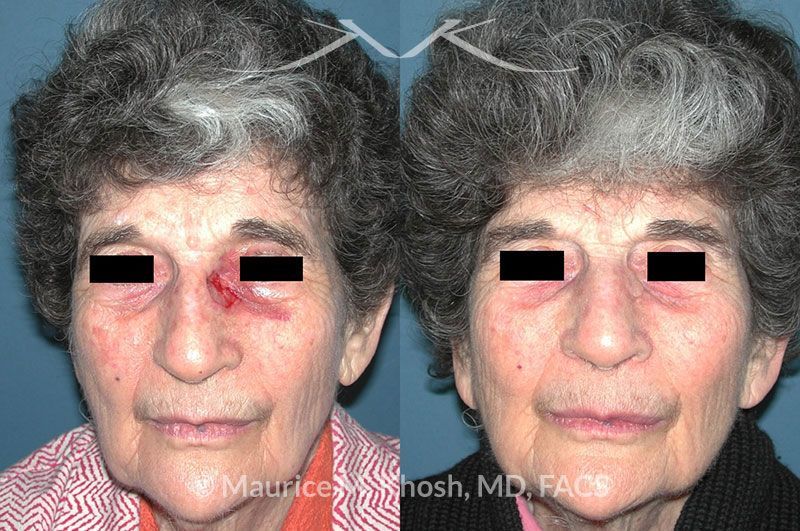
Eyelid Reconstruction, Eyelid Repair:

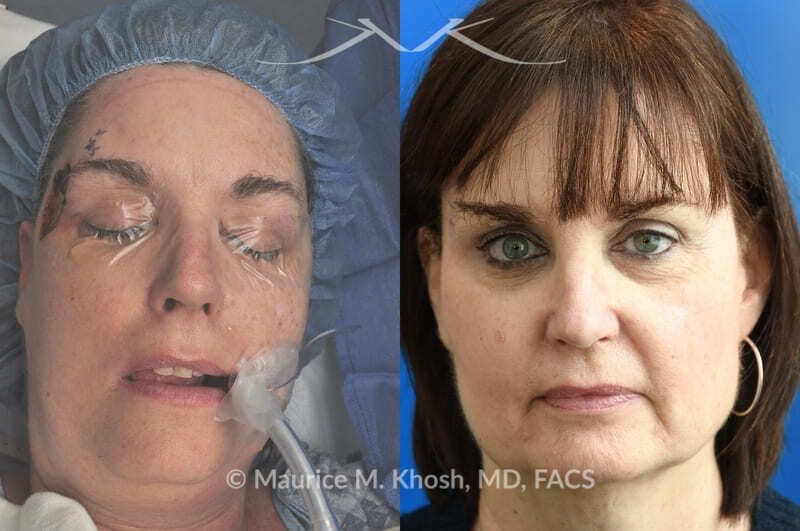
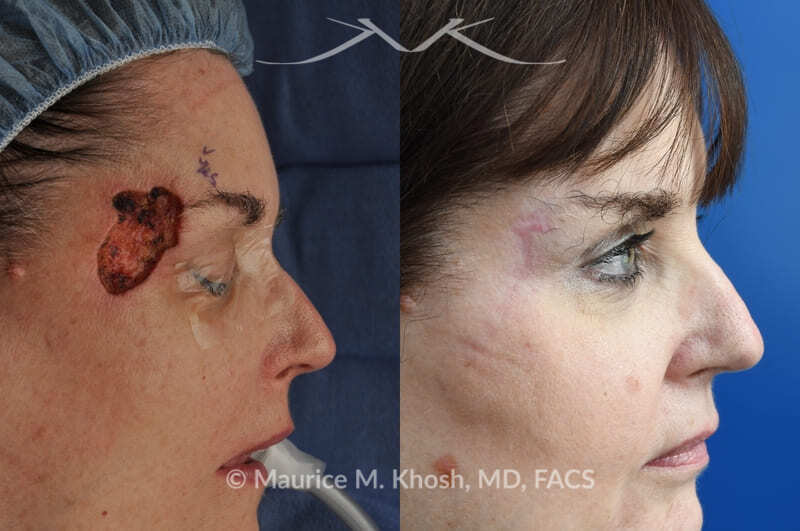
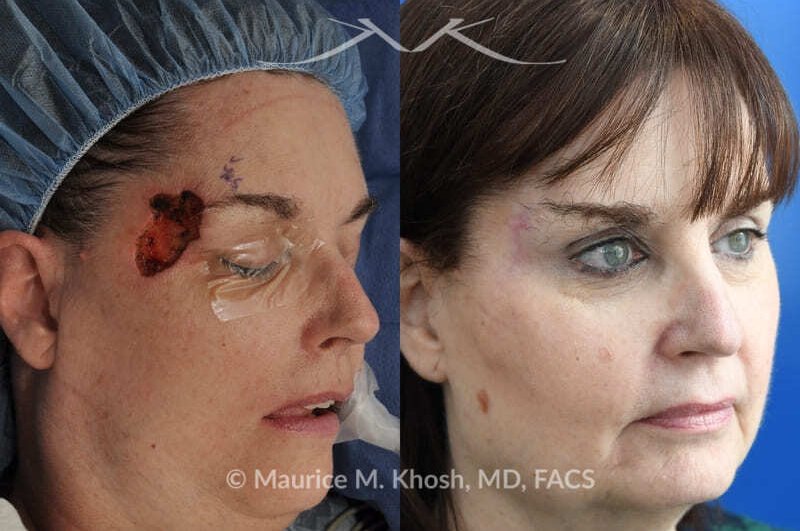
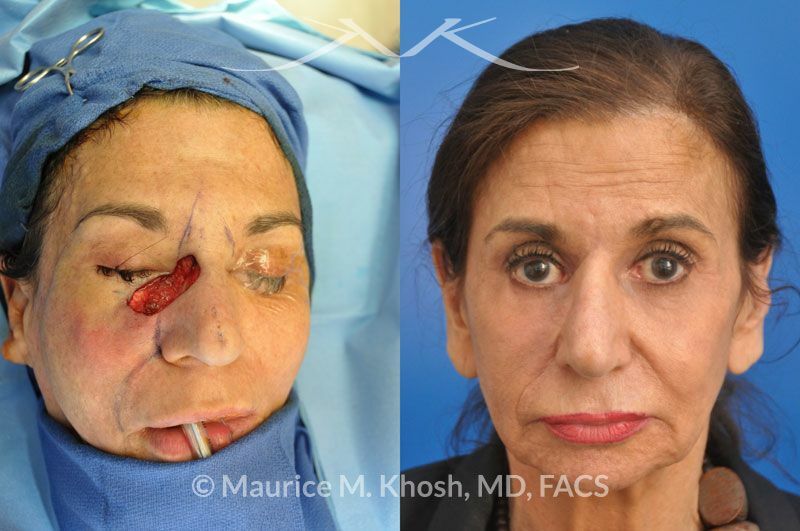
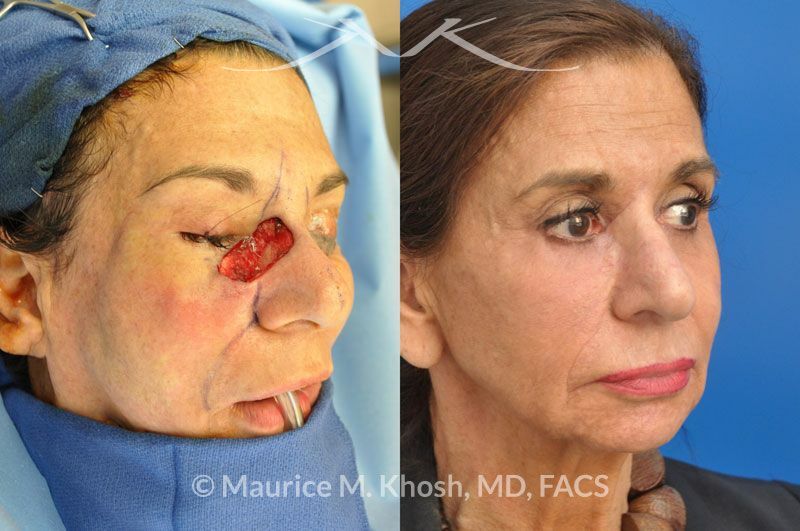
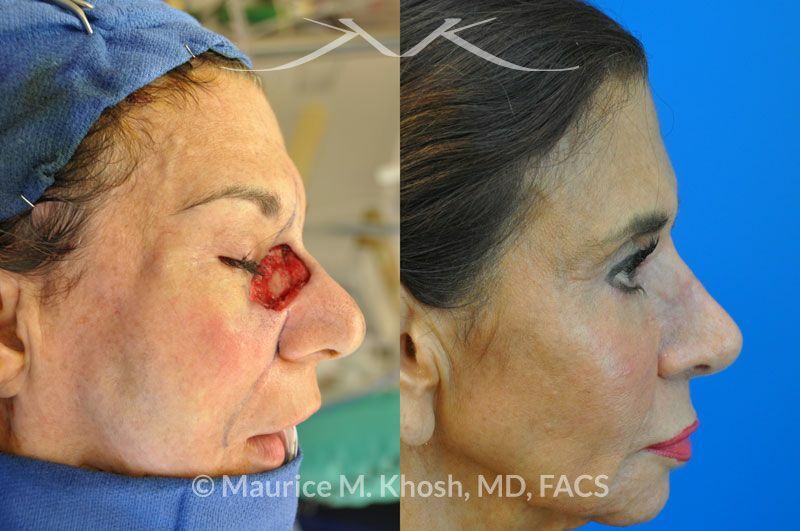
The eyelid skin is the thinnest on the face, which makes it ideal for healing, while leaving minimal visible scars. When the cancer defect in the eyelid remains outside of the eyelashes, reconstruction has a high probability of being totally invisible. The following cases are representative examples of how the eyelid heals after Moh’s surgery.

Skin Cancer Reconstruction: Eyelid Repair 1/2

Skin Cancer Reconstruction: Eyelid Repair 2/2

Nose Reconstruction, Nose Repair:

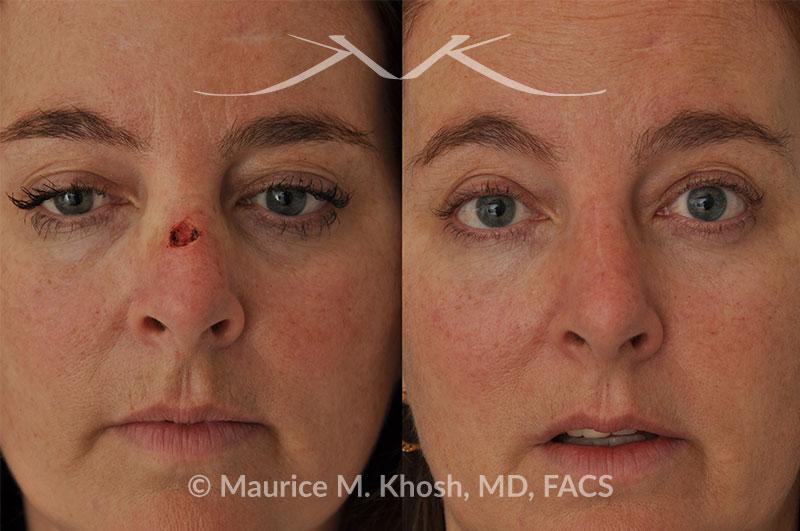
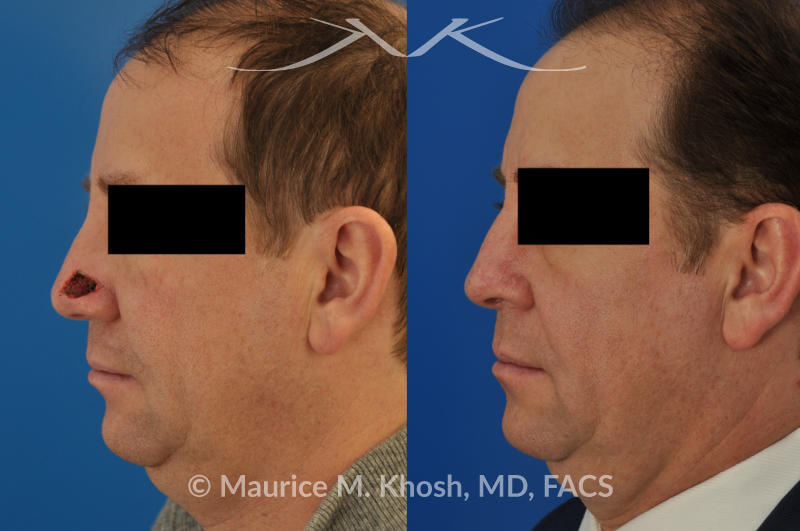
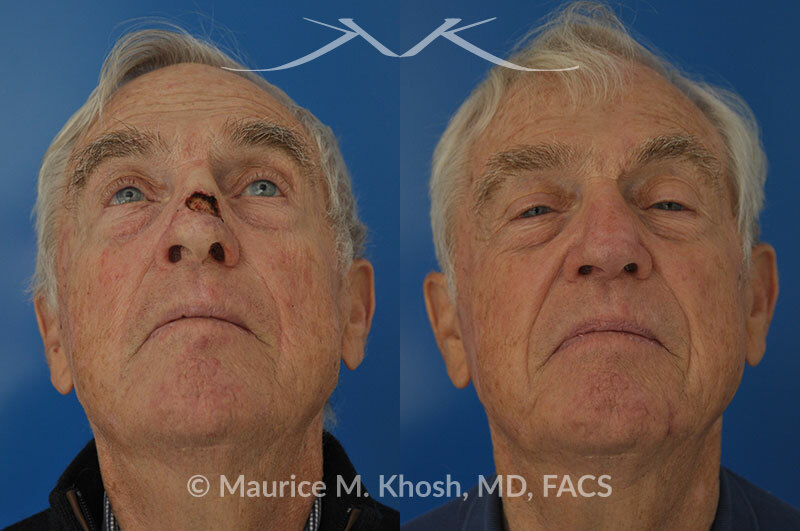
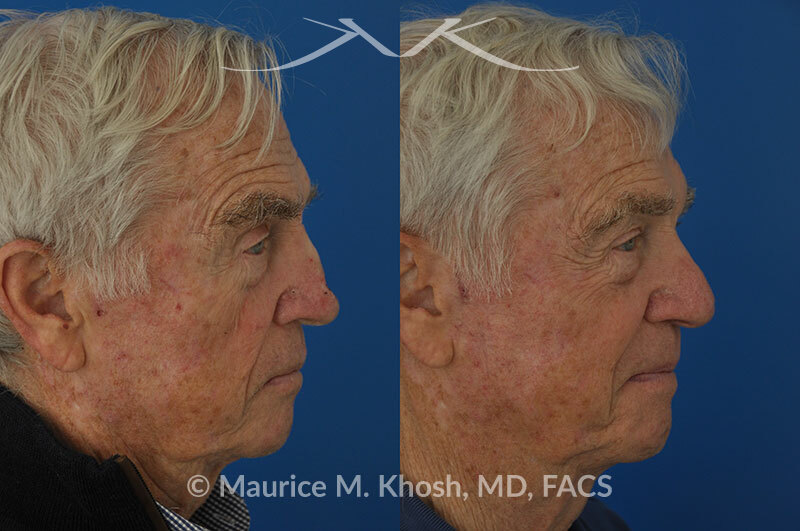
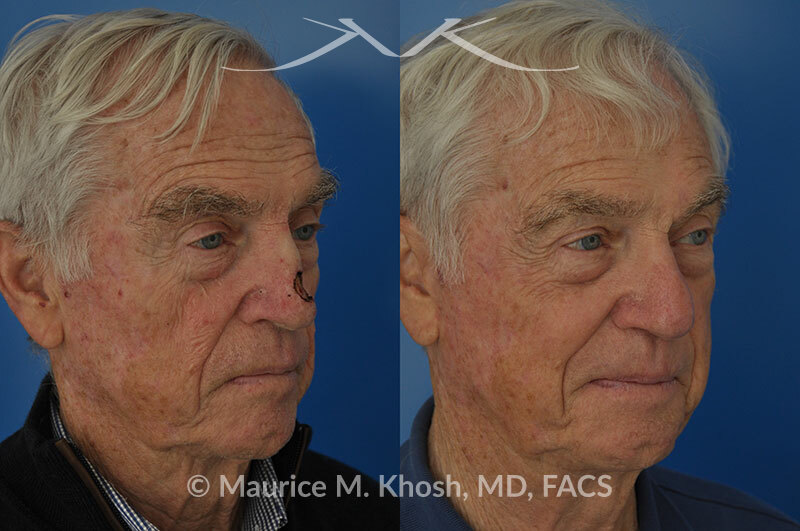
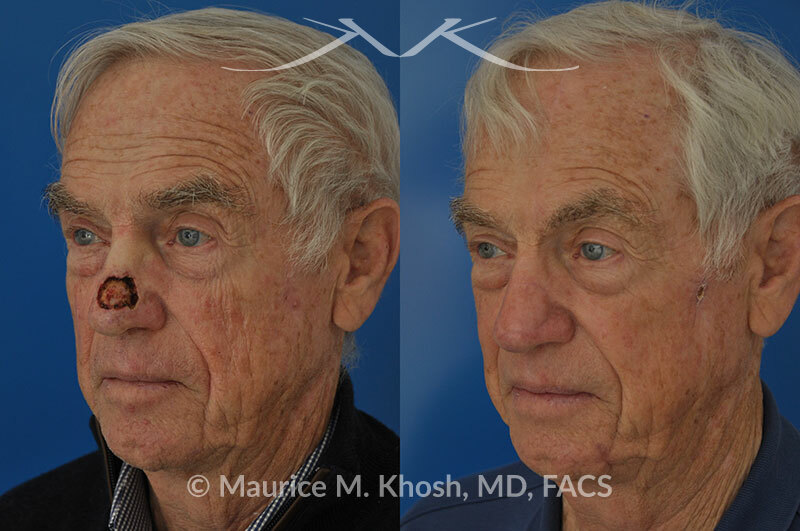
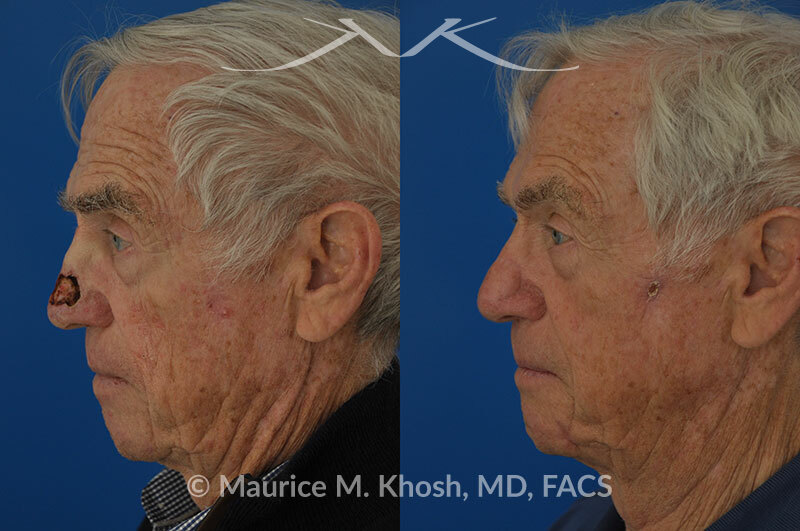
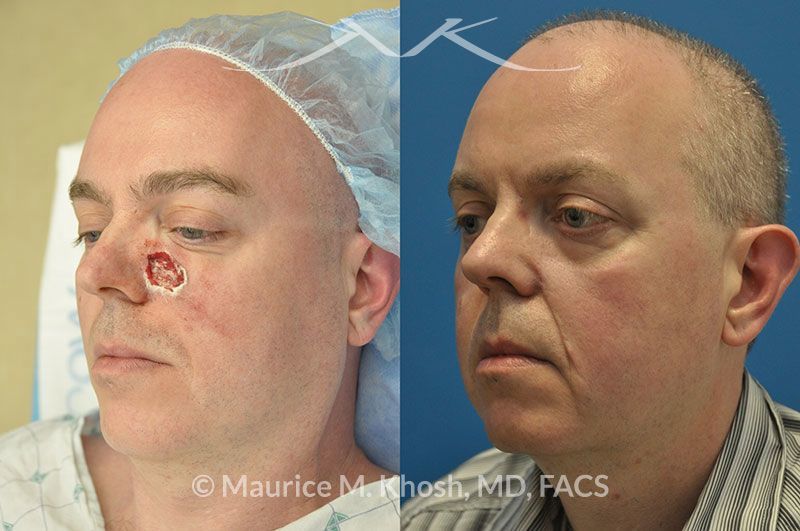
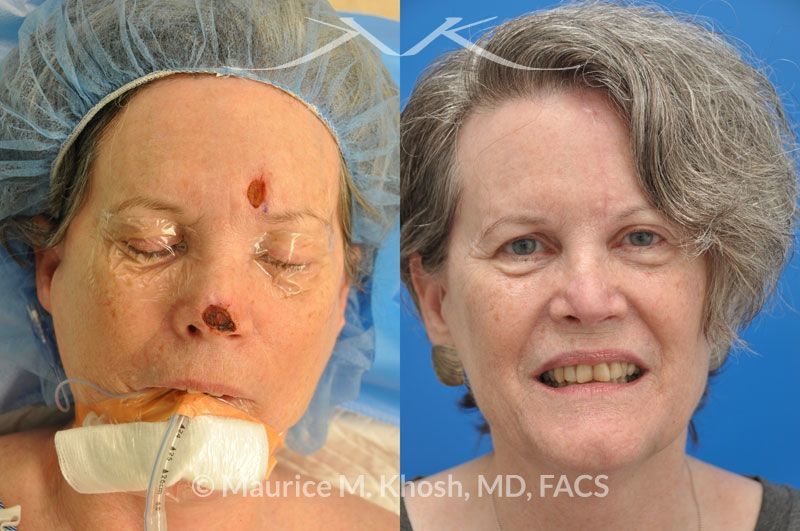
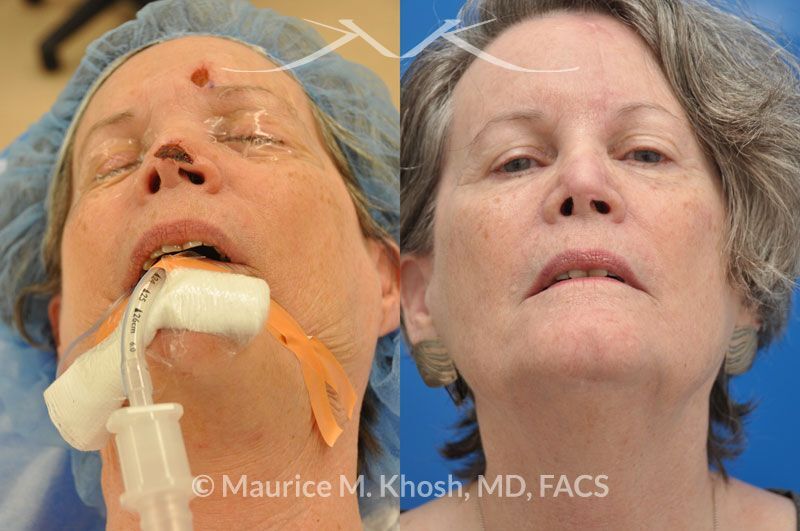
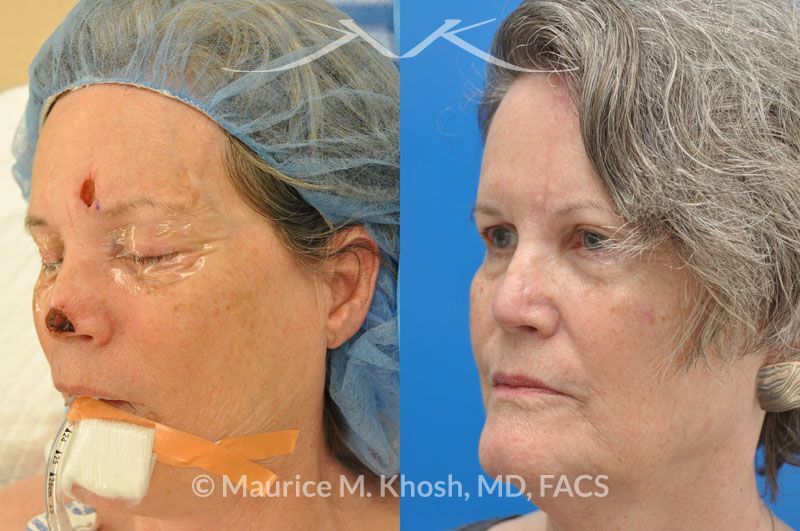
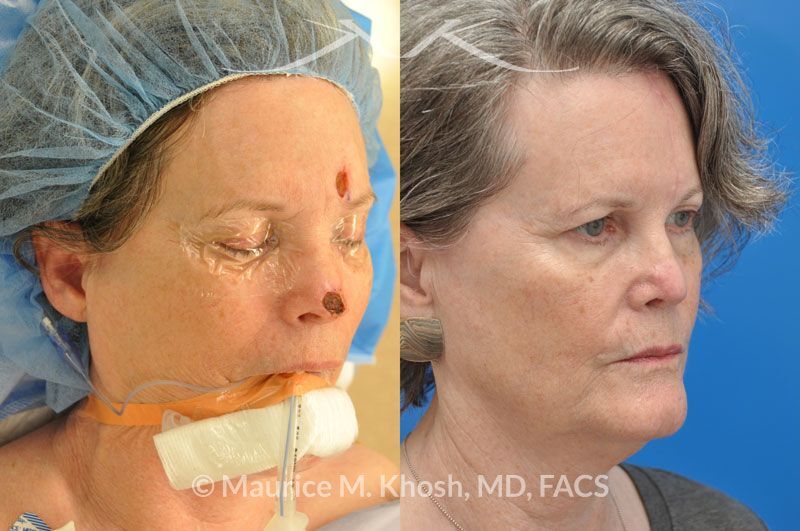
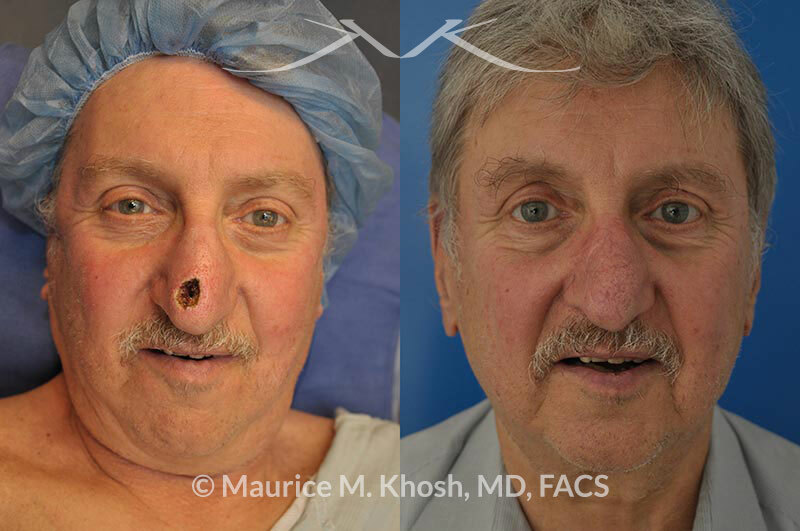
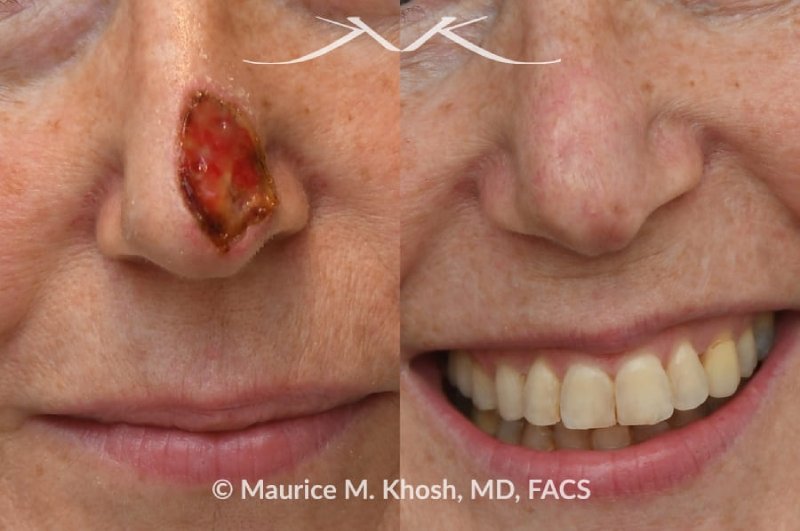
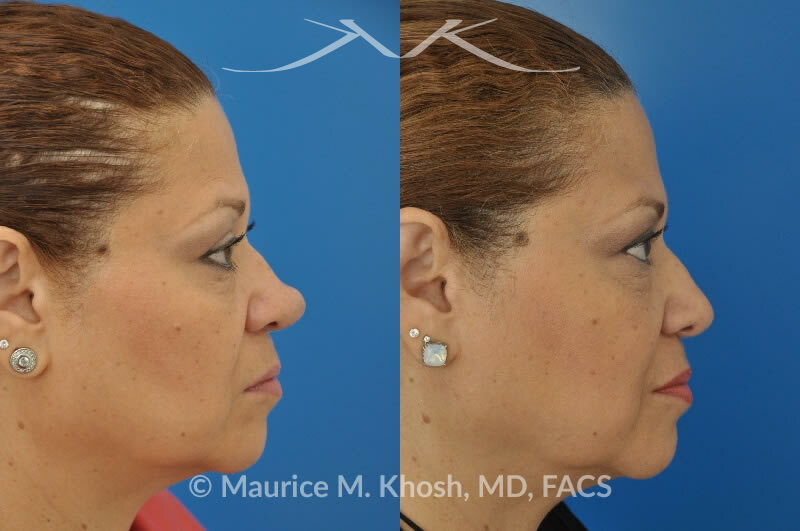
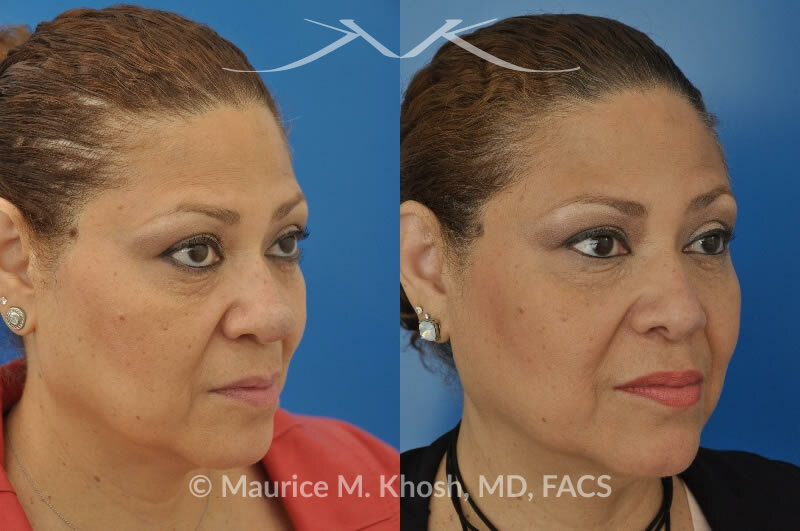
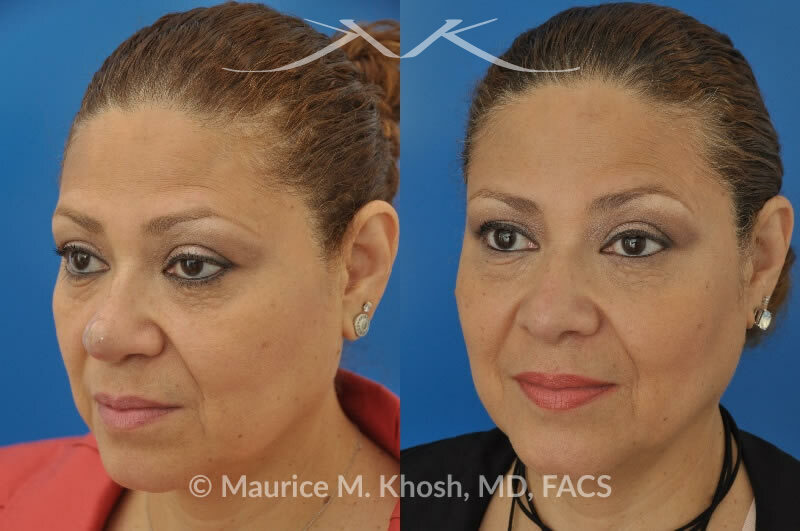
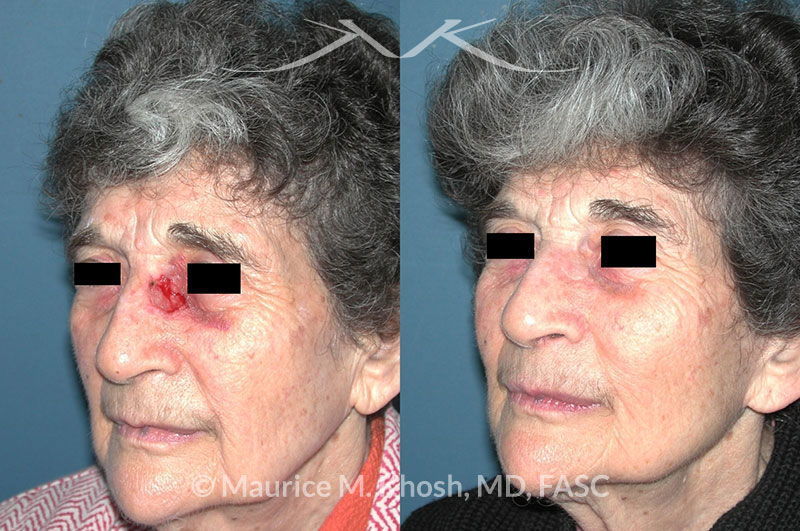
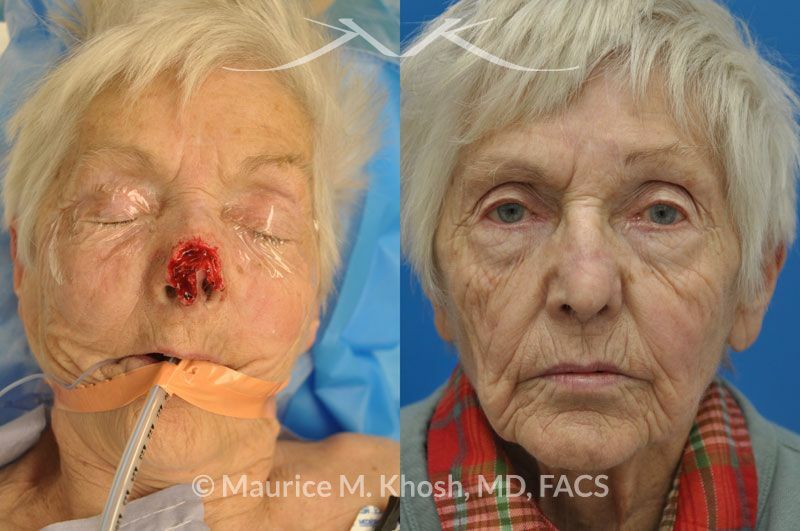
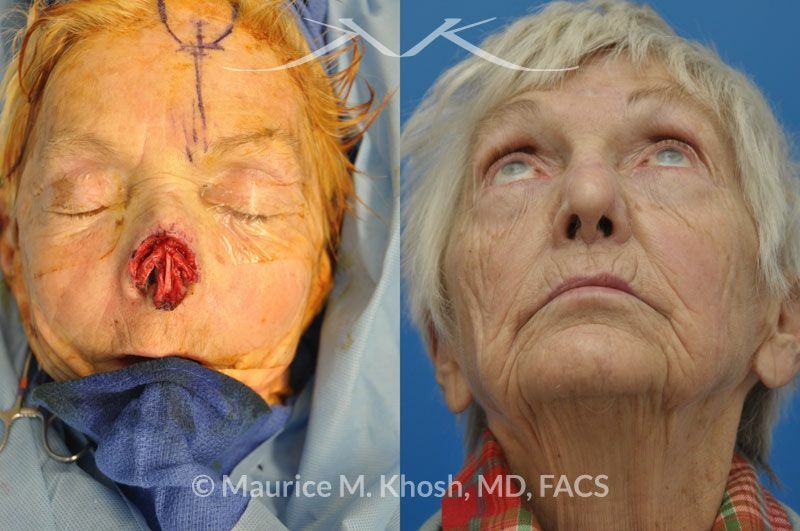
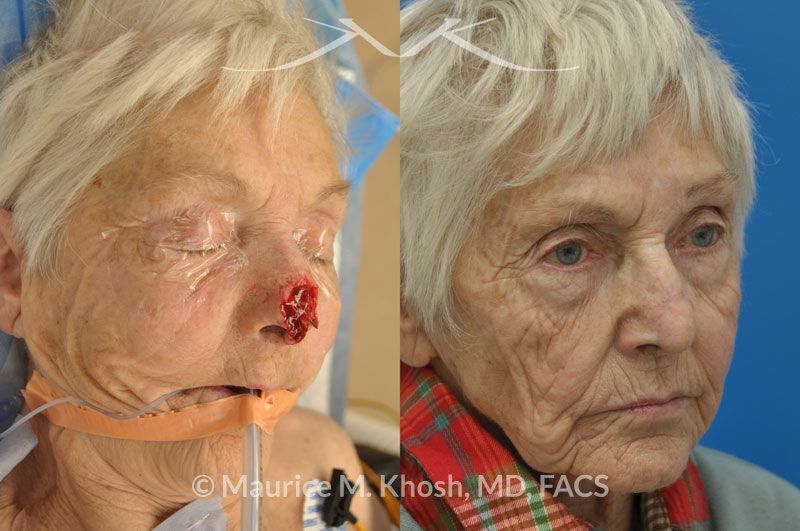
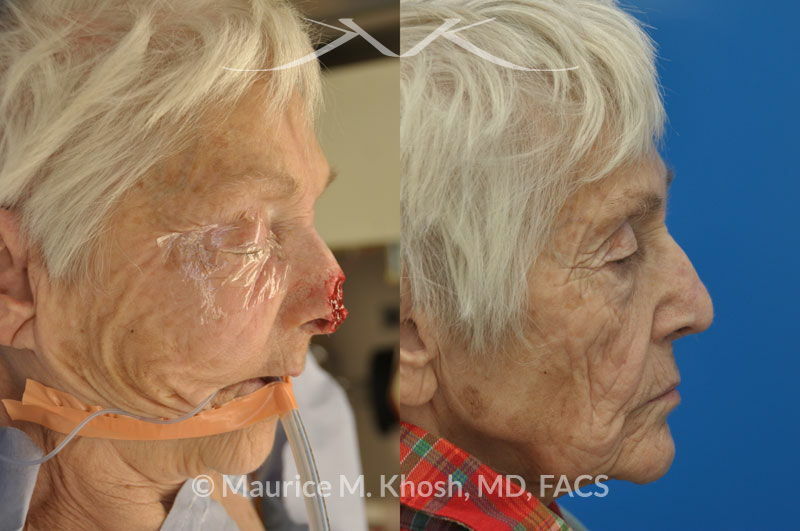
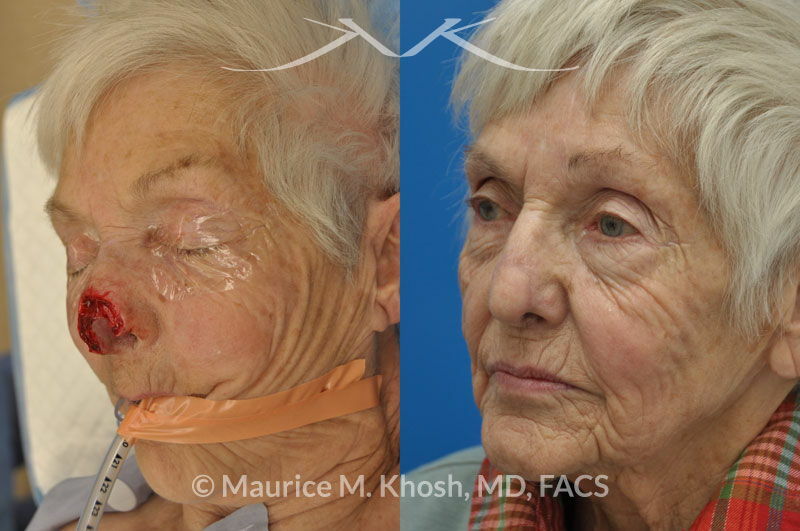
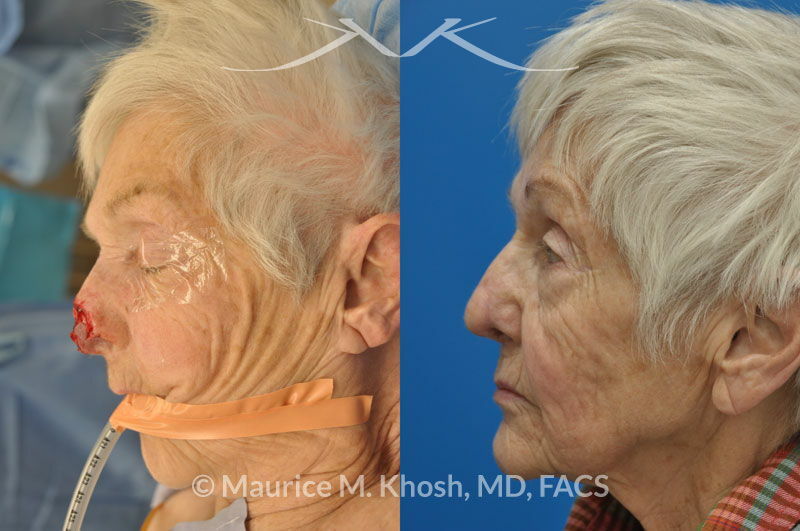
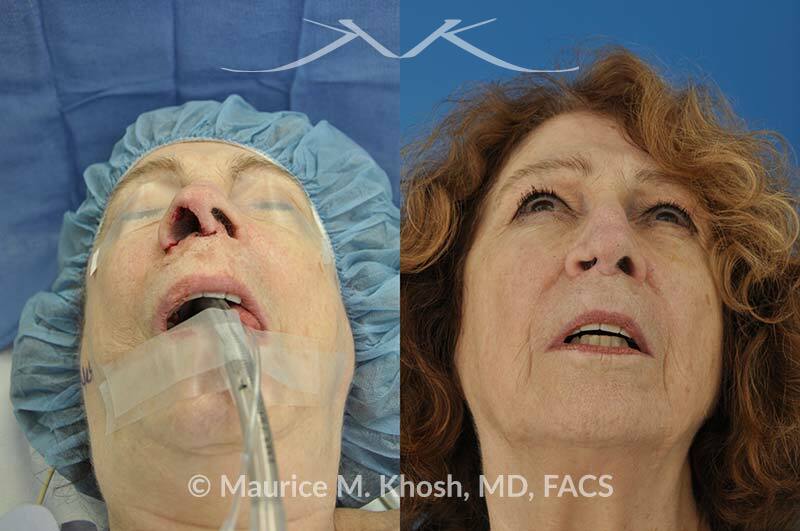
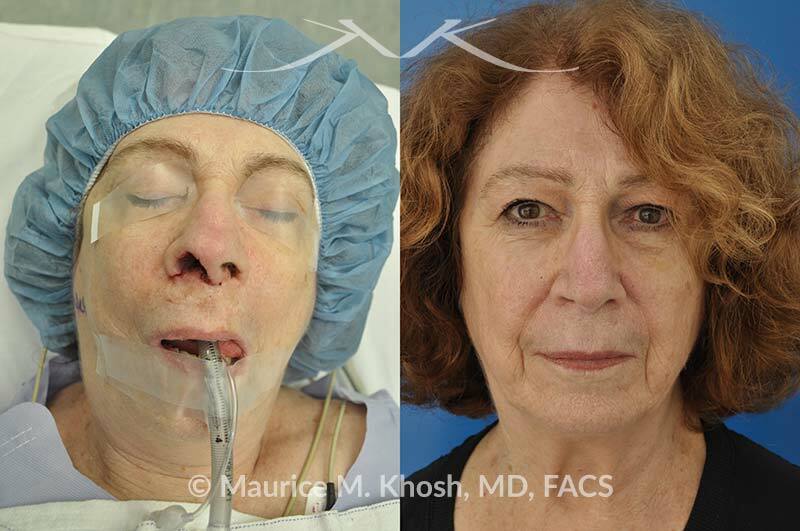
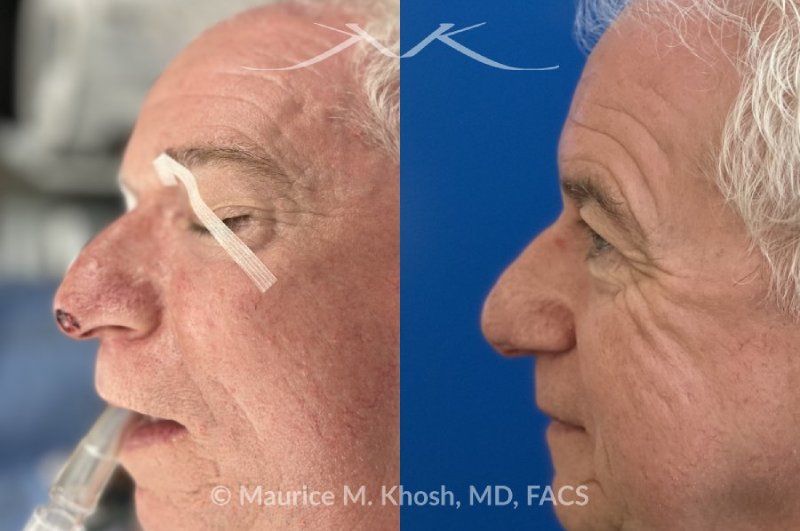
Dr Khosh excels in repair of nasal defects that result from excision of skin cancers. Nasal defects can be confined to the skin, or they can extend through the cartilage to inside the nose. Defects, which extend into the nasal cavity represent the most challenging reconstructions. In those circumstances, not only the skin, but also the structural support and the inner lining must be refashioned.

The size, the depth, and the general condition of the patient must be considered in repair of nose defects. When a defect is confined to one side of the nose, the other side can be used as a template for reconstruction. If the defect causes bilateral deficit in the nose, old photographs can be used as a guide in reconstruction.

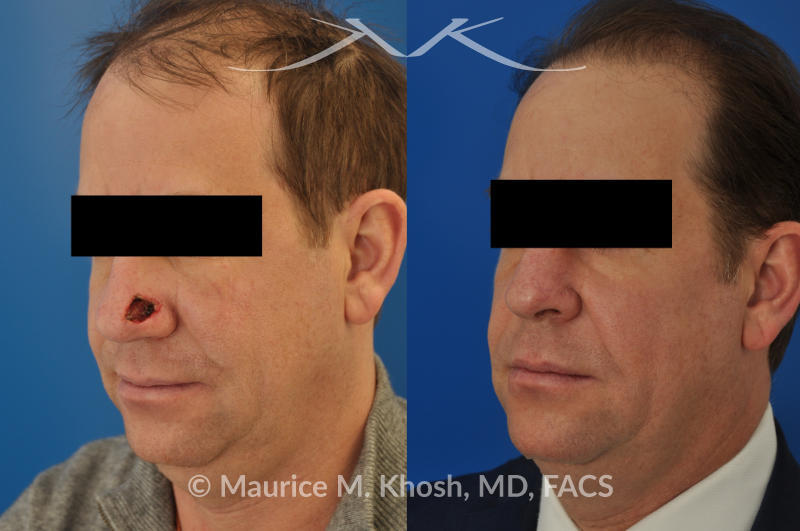
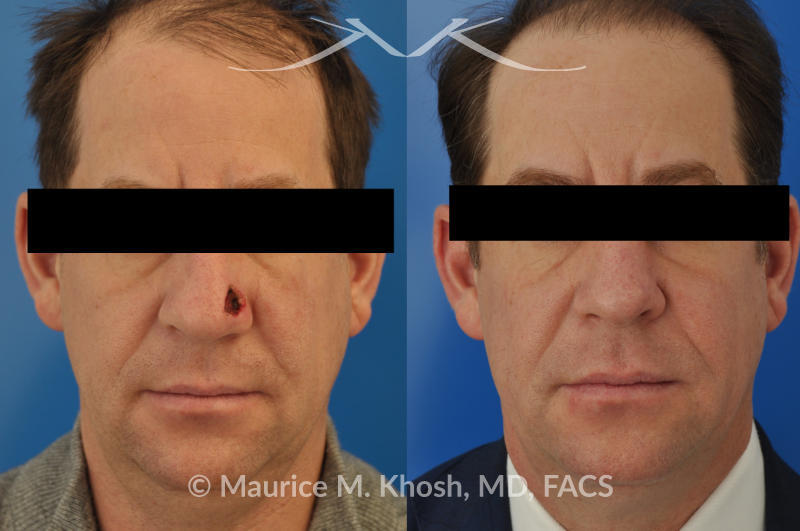
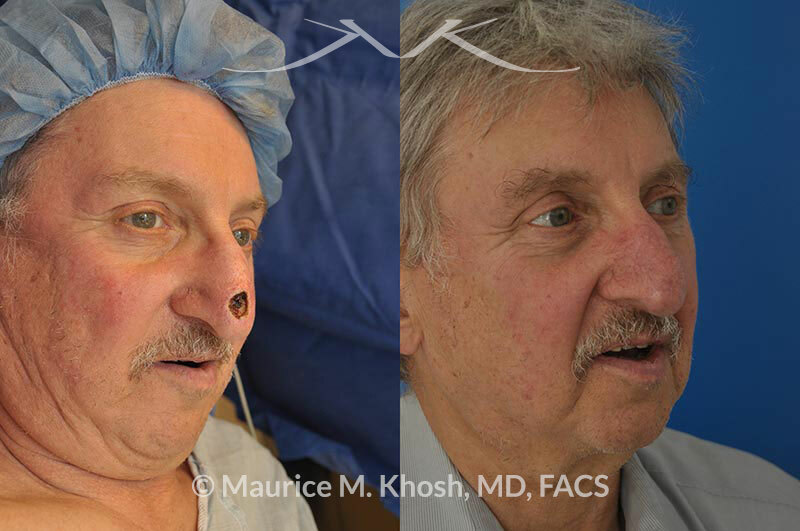
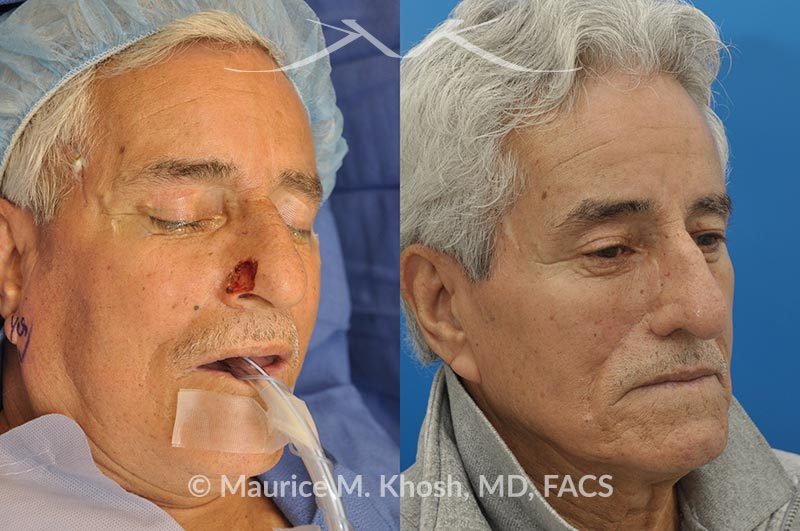
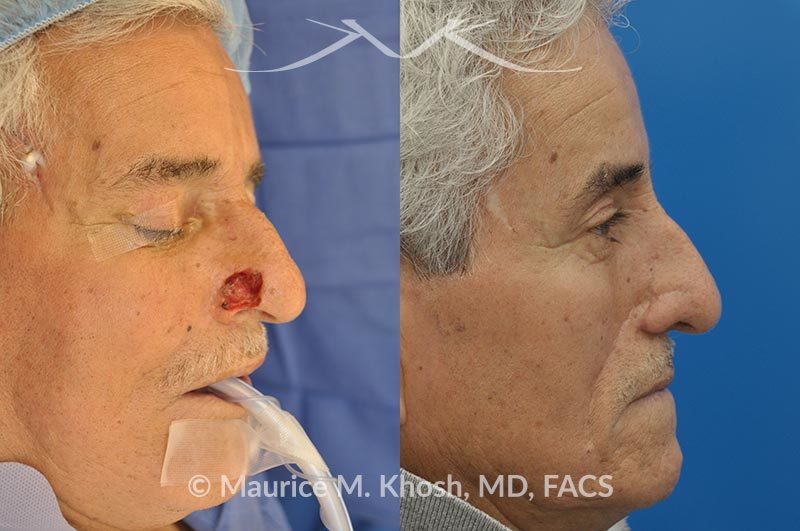
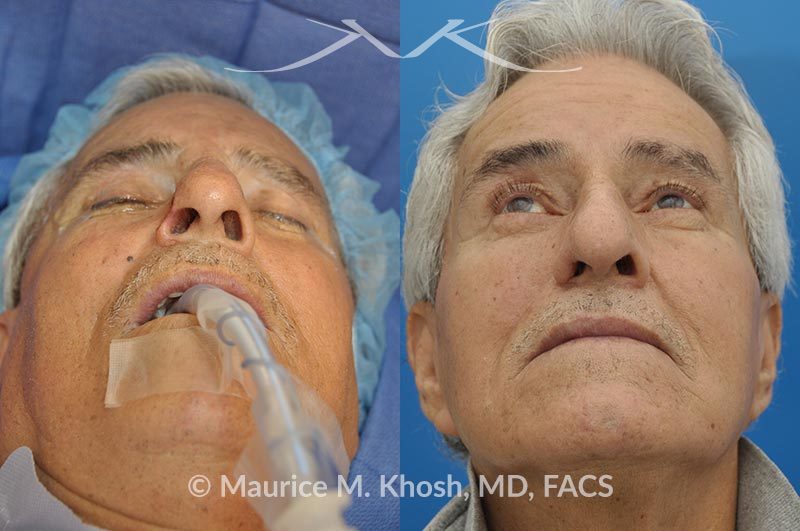
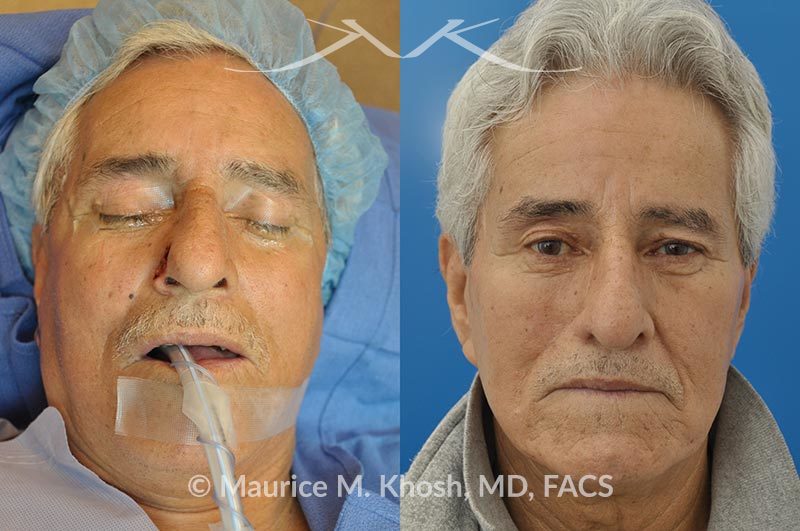
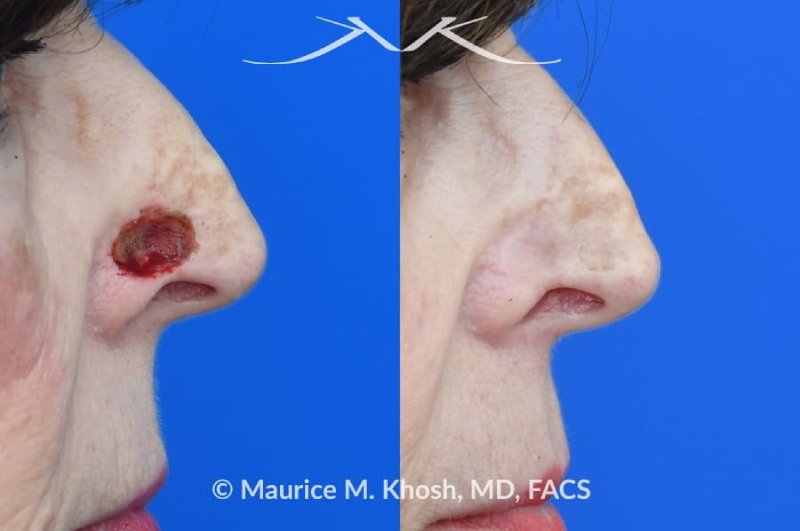
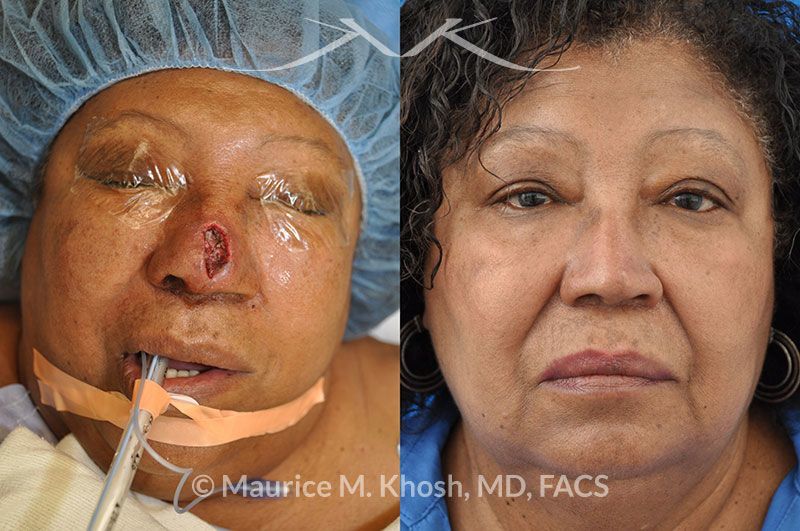
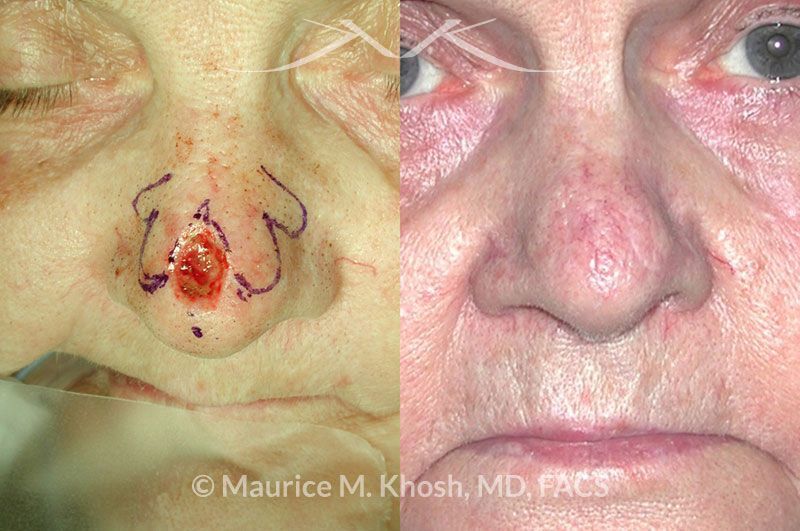
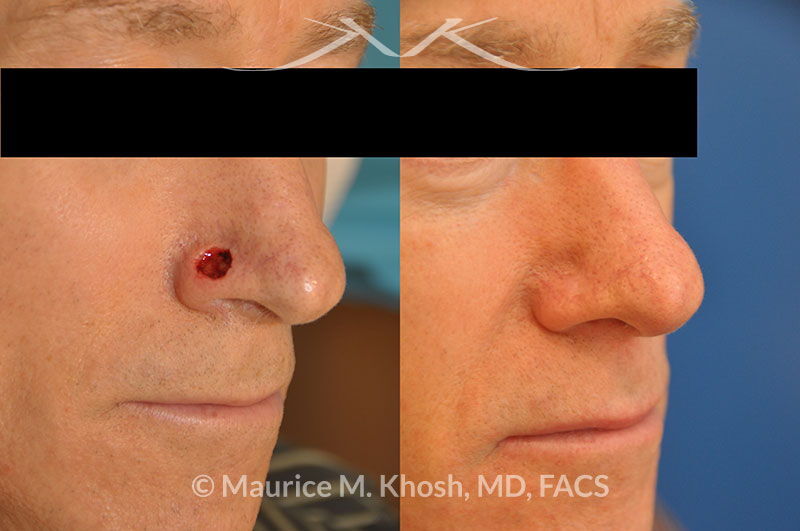
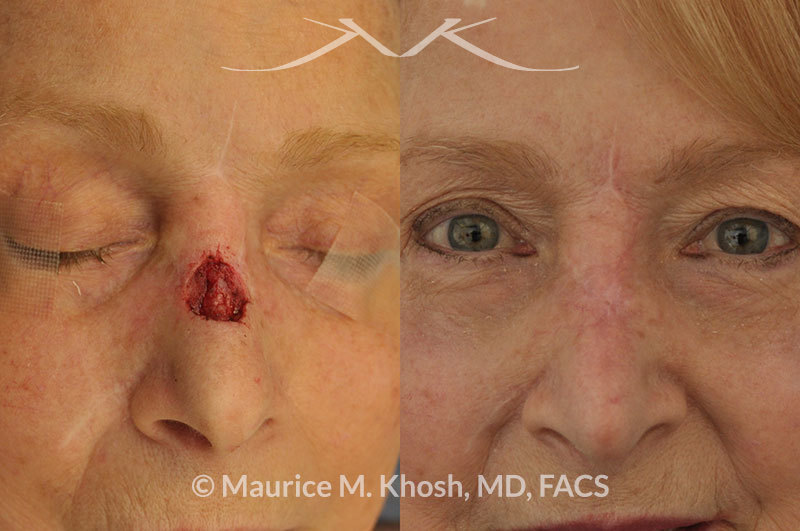
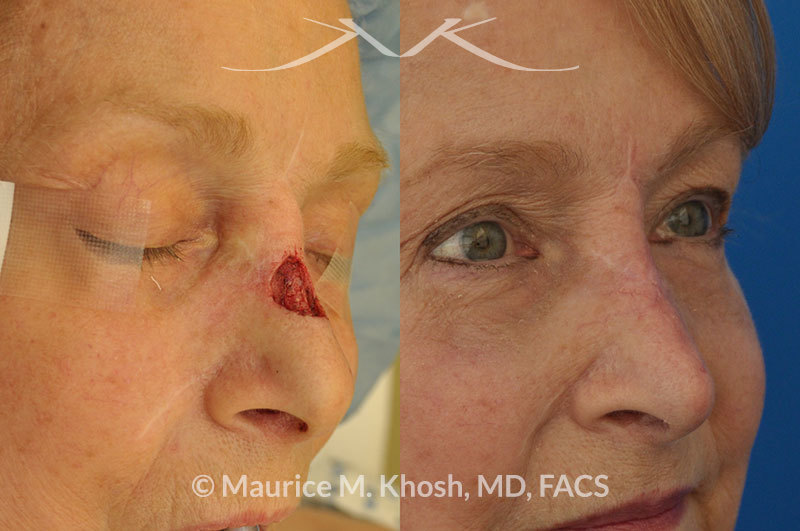
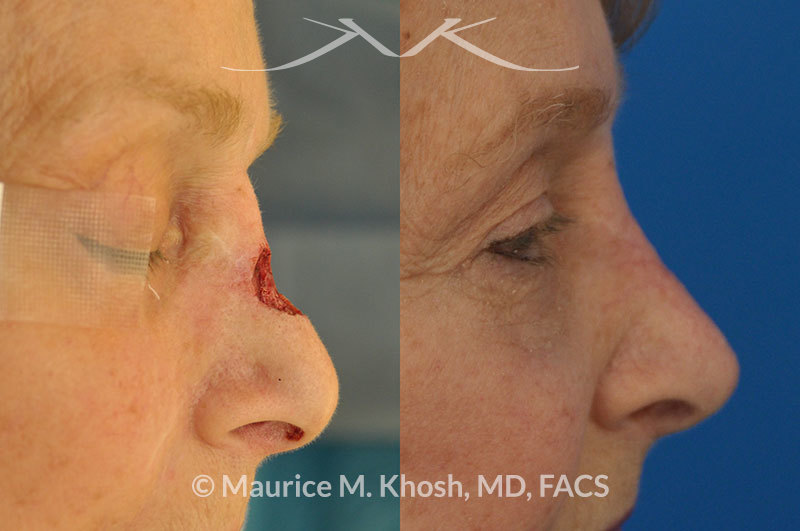
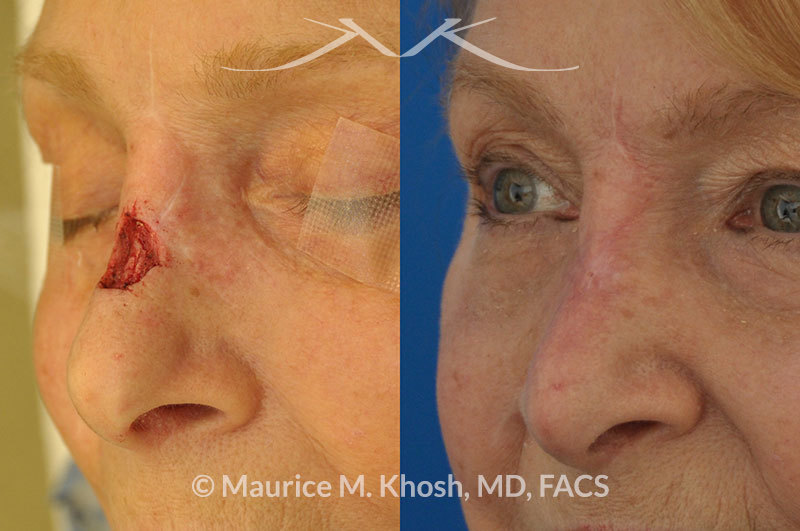
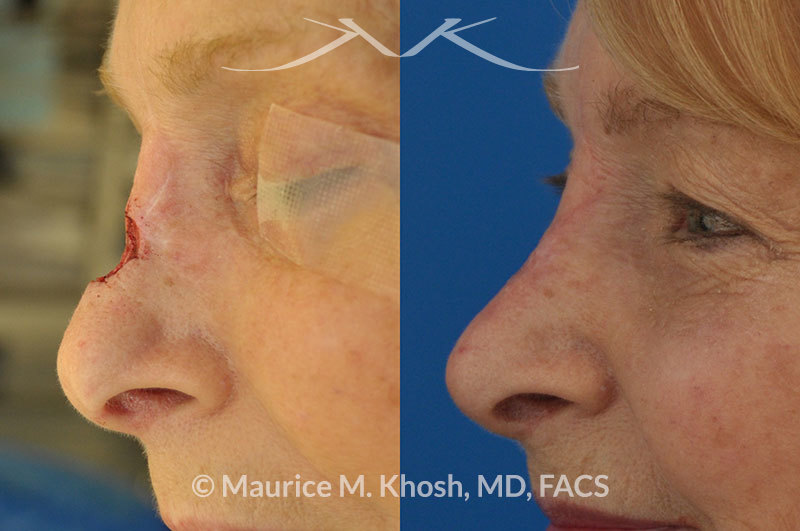
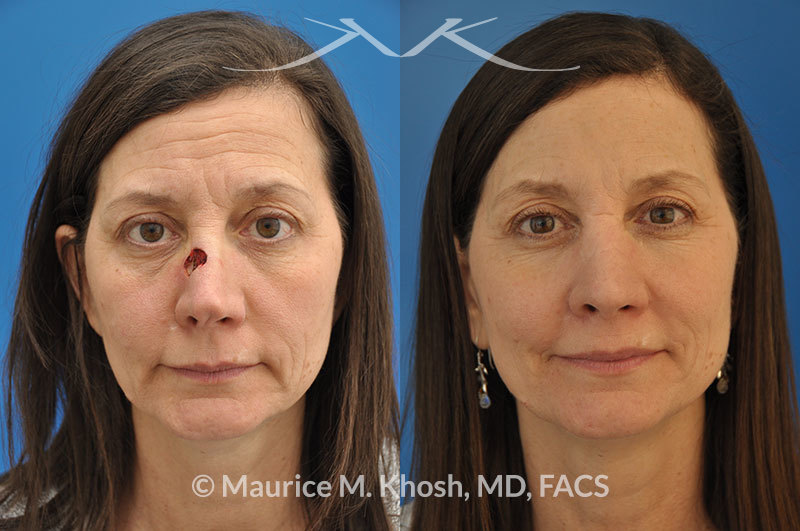
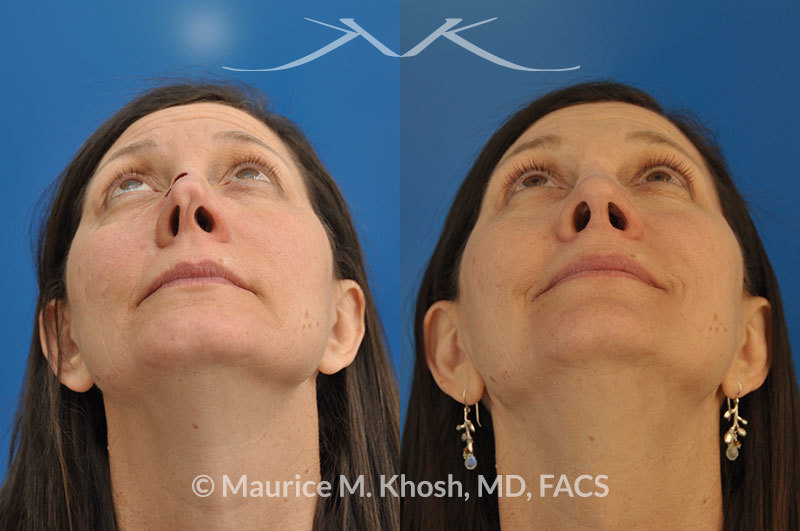
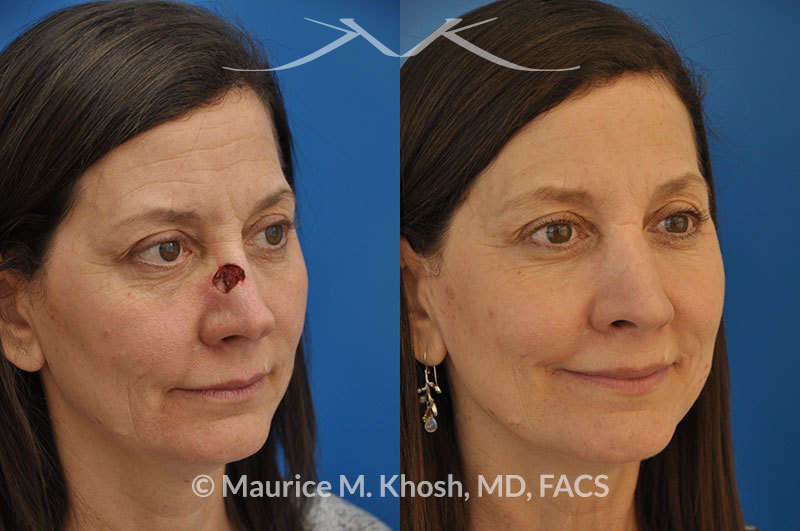
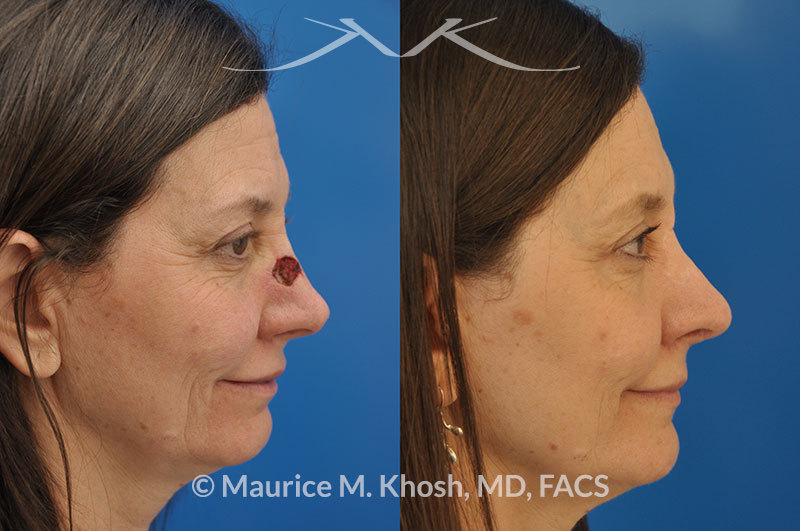
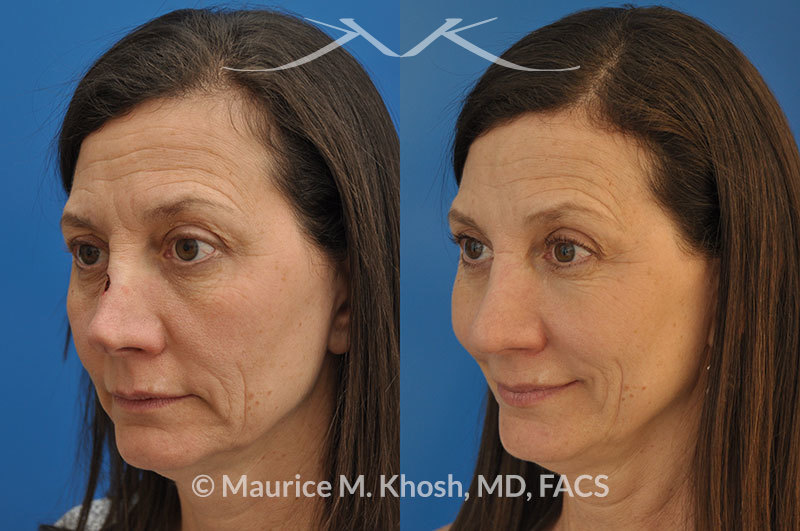
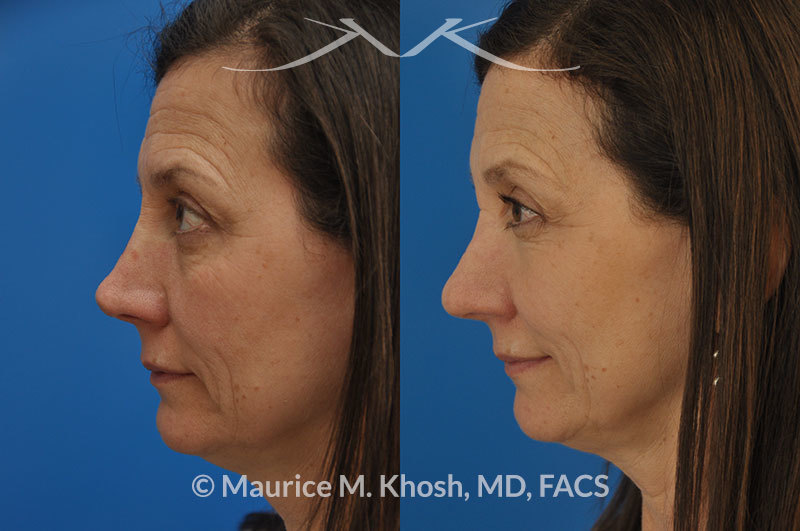
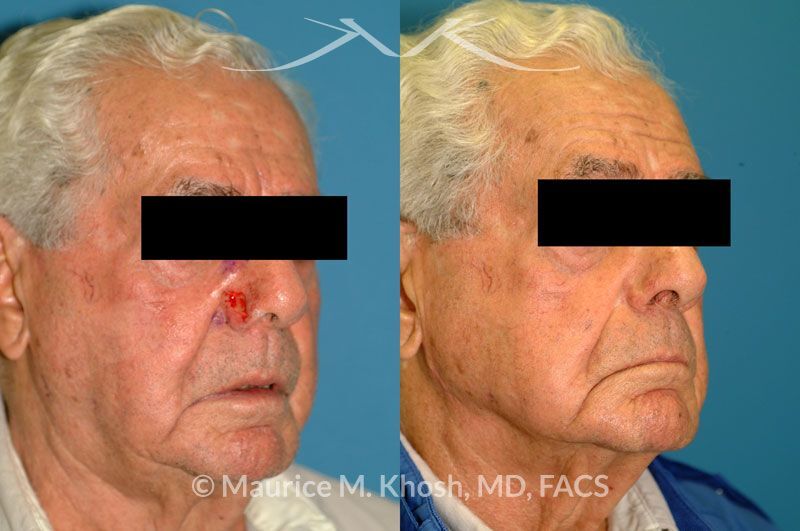
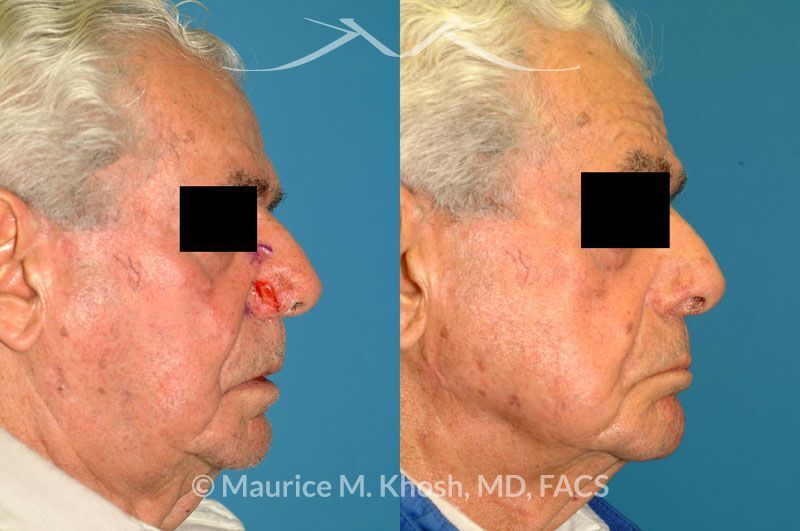
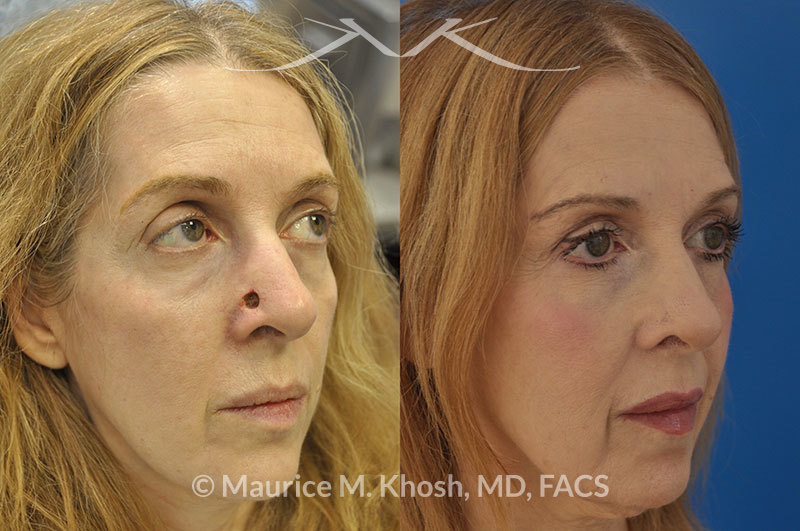
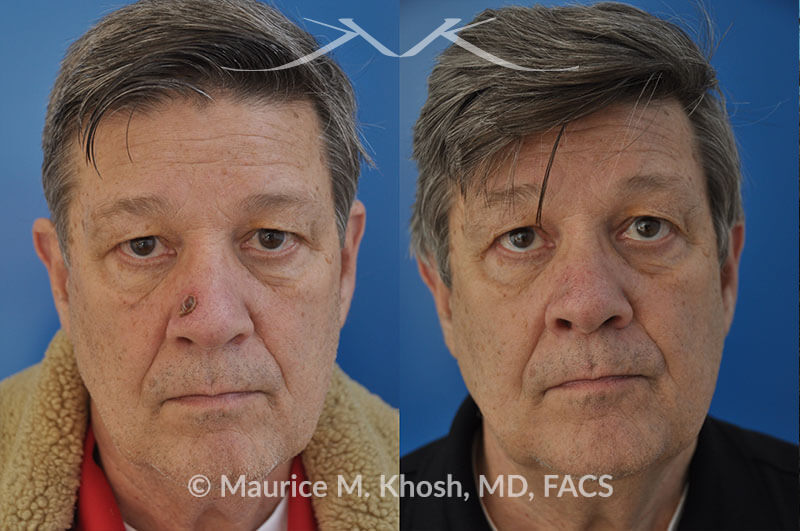
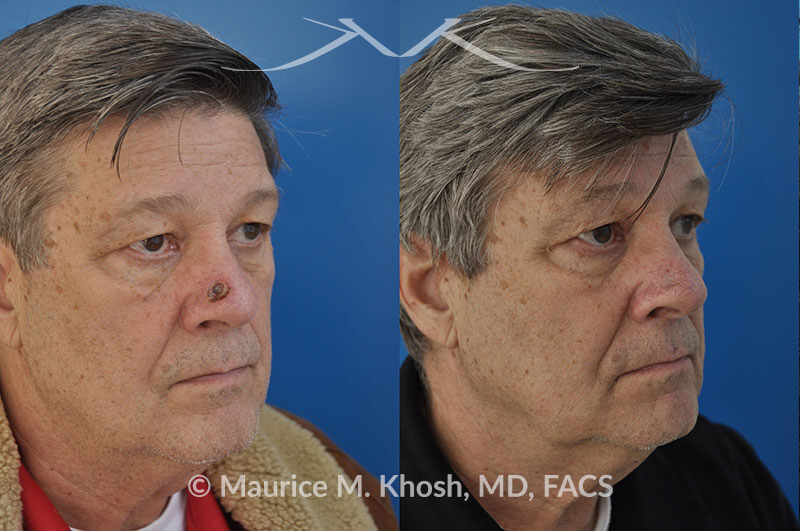
Small to medium sized defects of the nose can be repaired with a bilobed flap, where adjacent nasal skin is transferred into the defect. The following patient was reconstructed in this manner. As you can see, the repaired defect is hardly noticeable.

Skin Cancer Reconstruction: Nose Repair 1/4

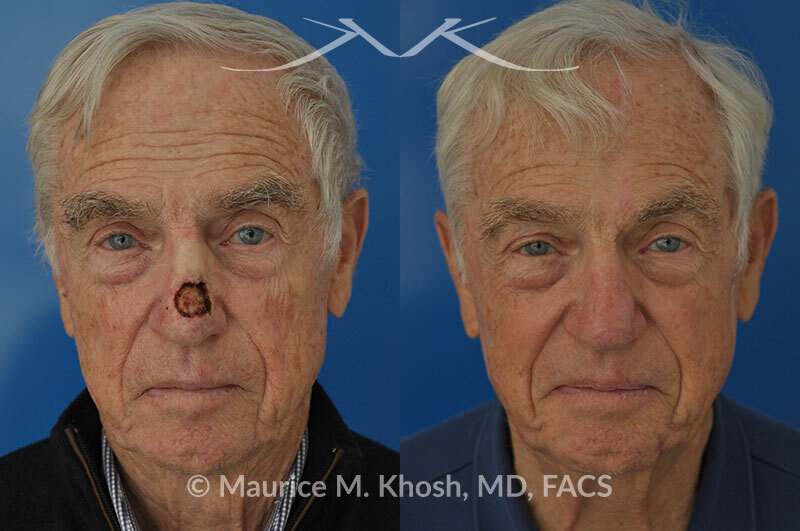
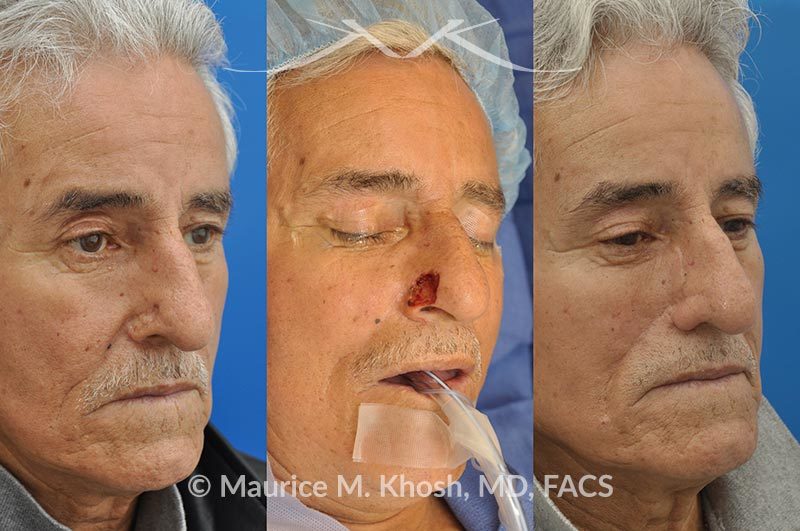
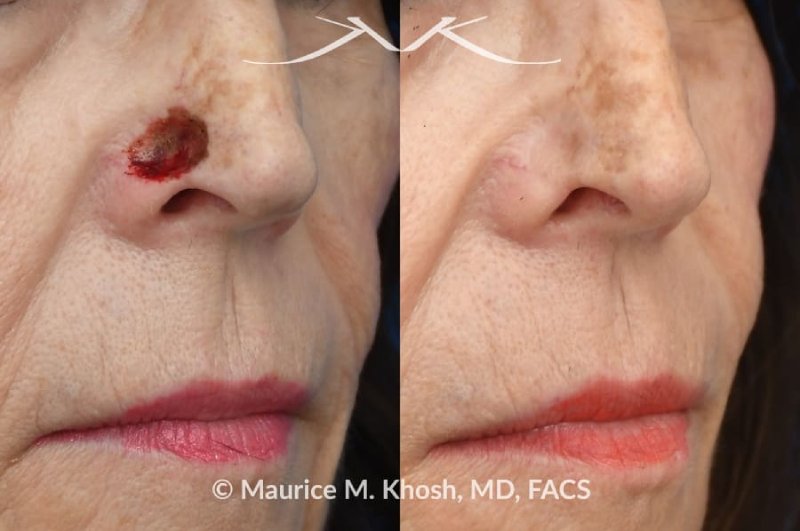
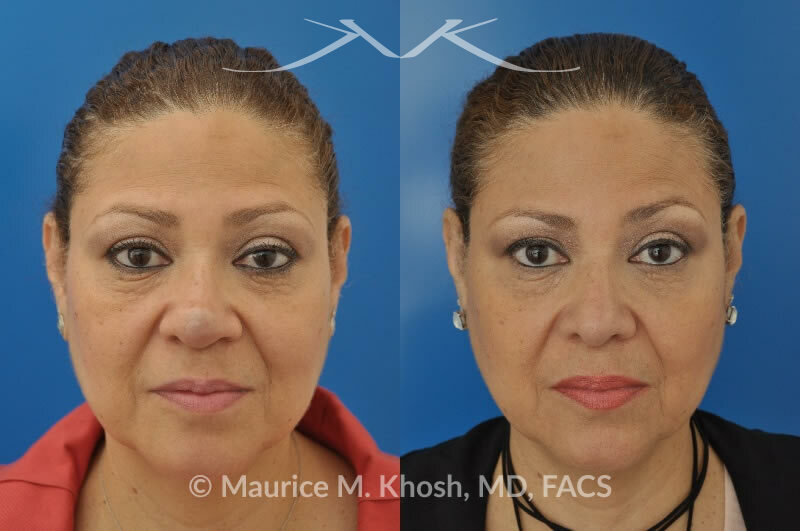
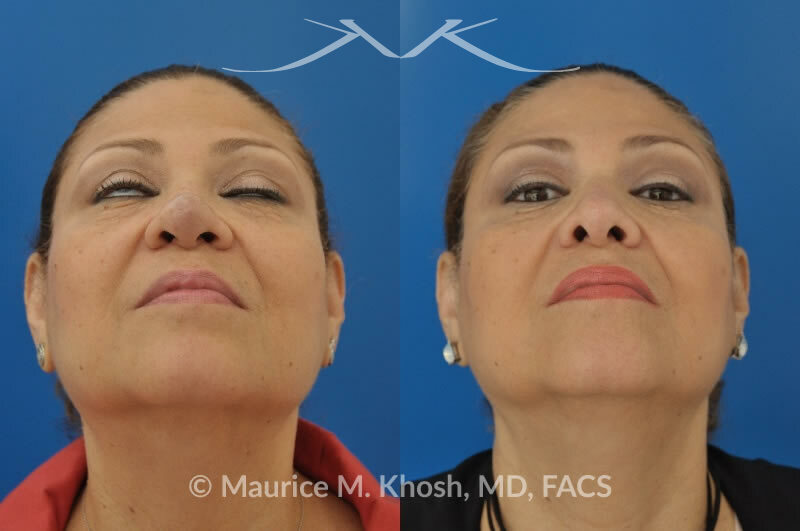
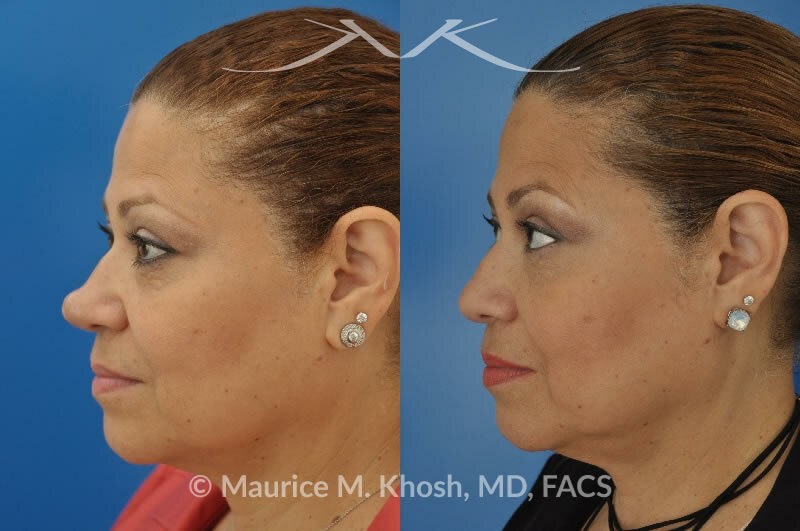
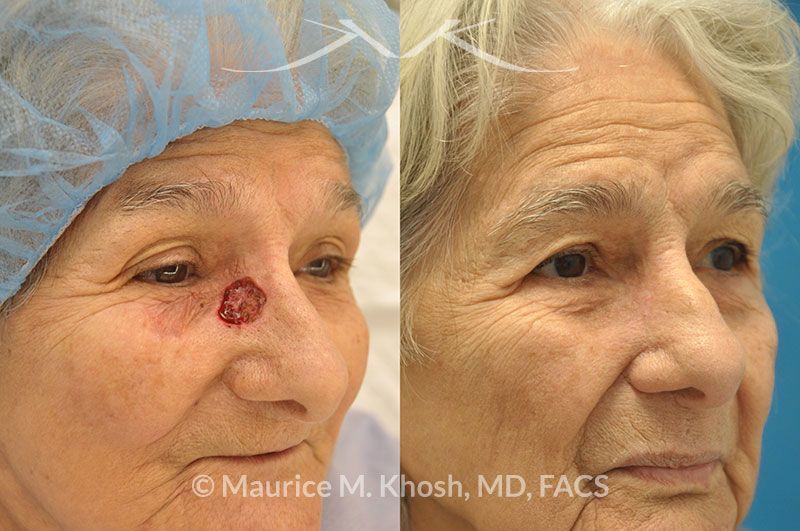
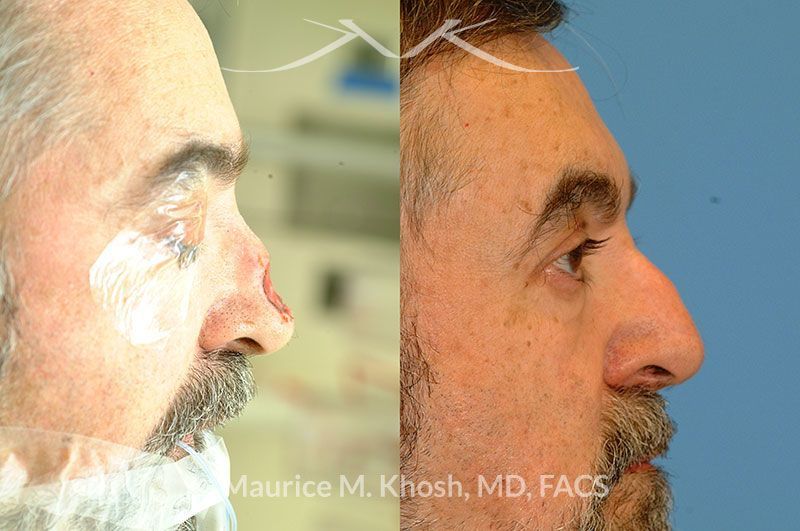
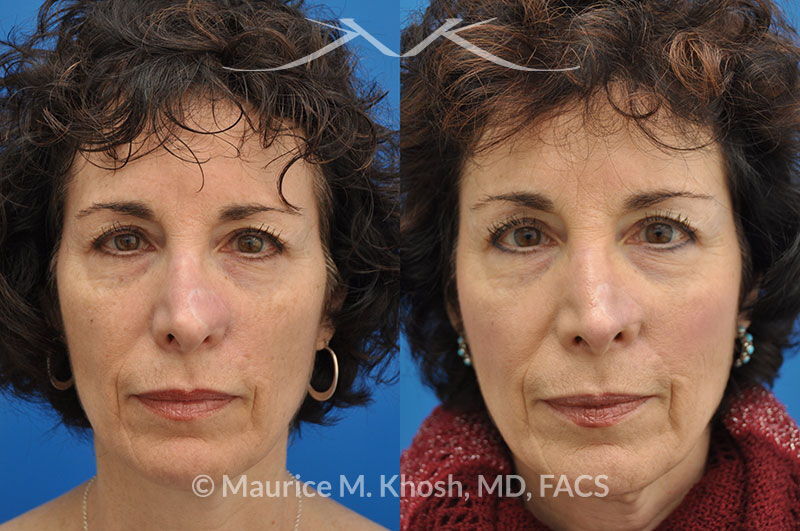
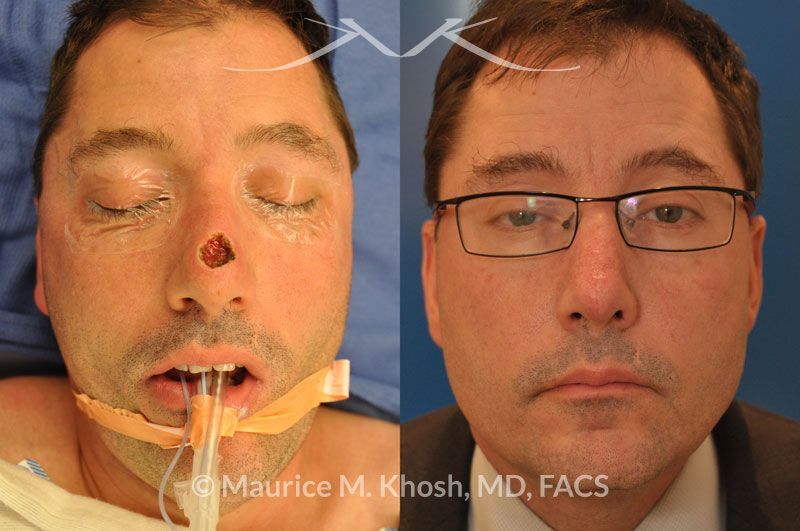
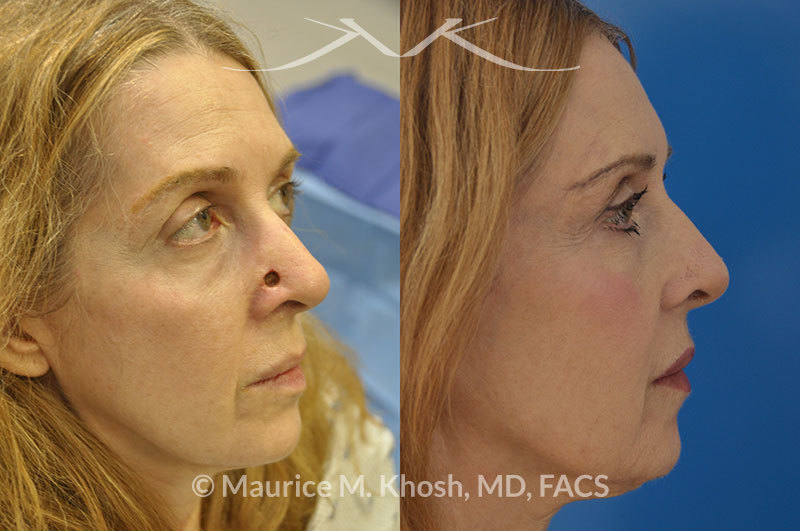
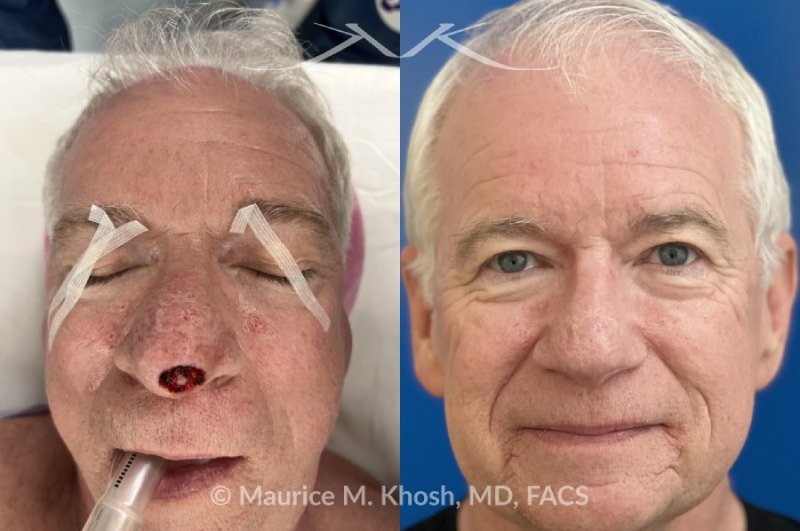
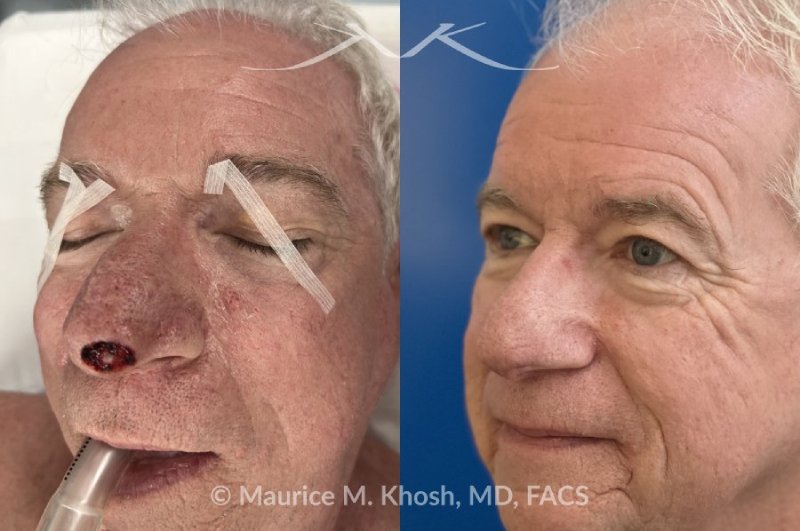
Larger defects, especially those involving the nasal tip are best treated with a paramedian forehead flap (a vertical flap of forehead tissue taken from the midline). This is a two staged procedure staggered over two weeks. The paramedian forehead flap was used in the following patient to repair a large nasal tip defect. The only visible sign from the forehead donor site is a well-healed vertical scar. This flap does not affect sensation or mobility of the forehead.

Skin Cancer Reconstruction: Nose Repair 2/4

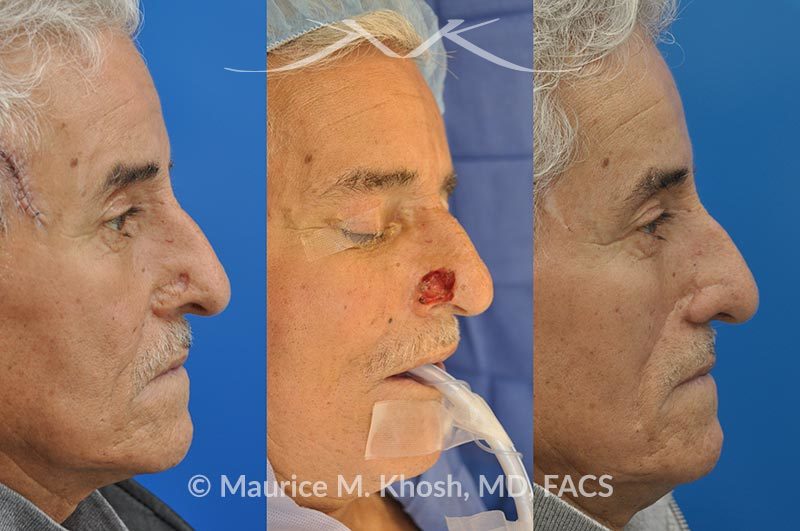
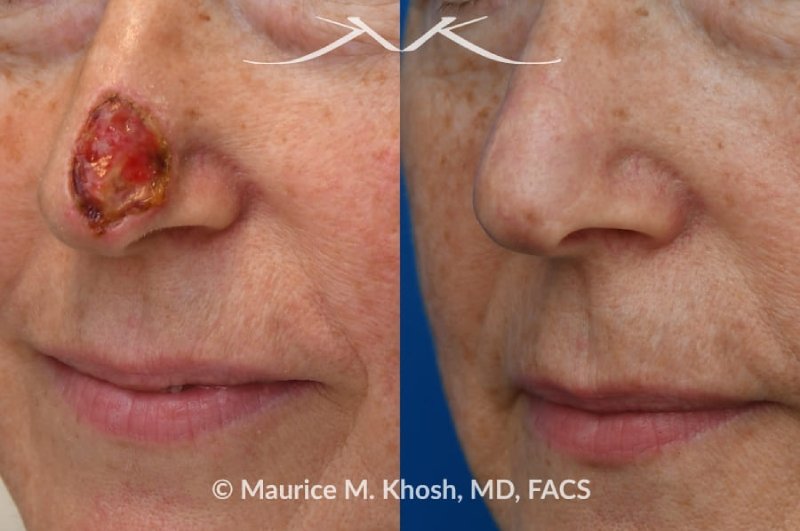
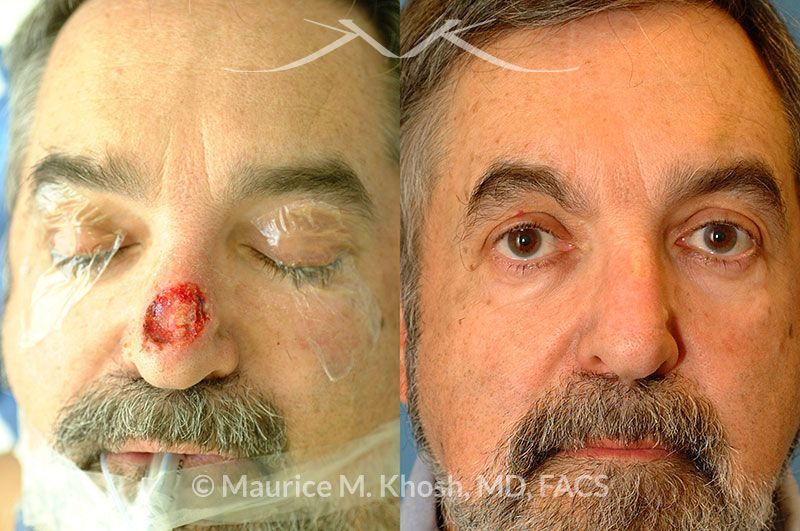
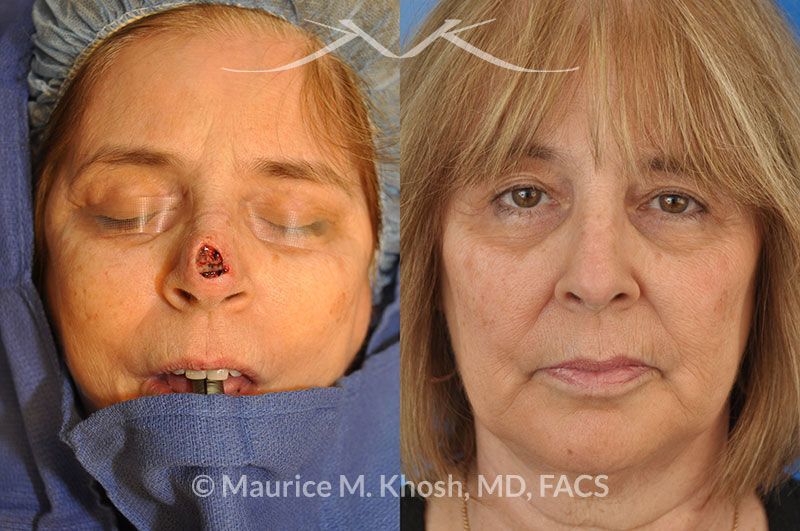
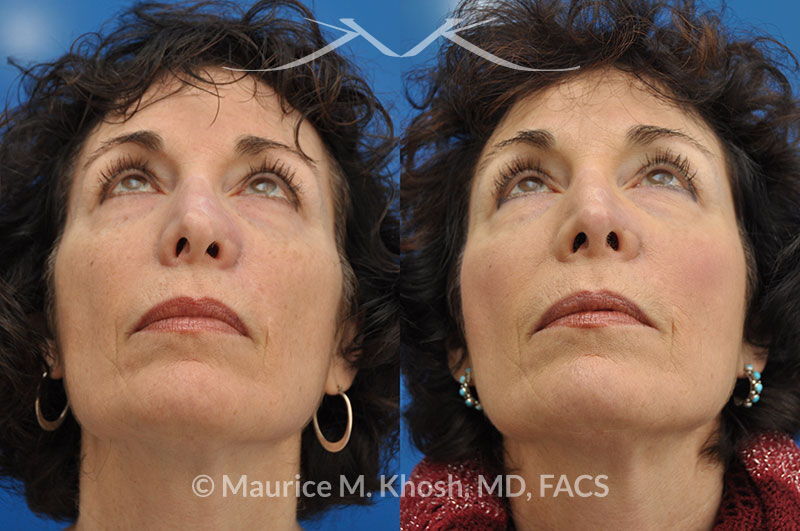
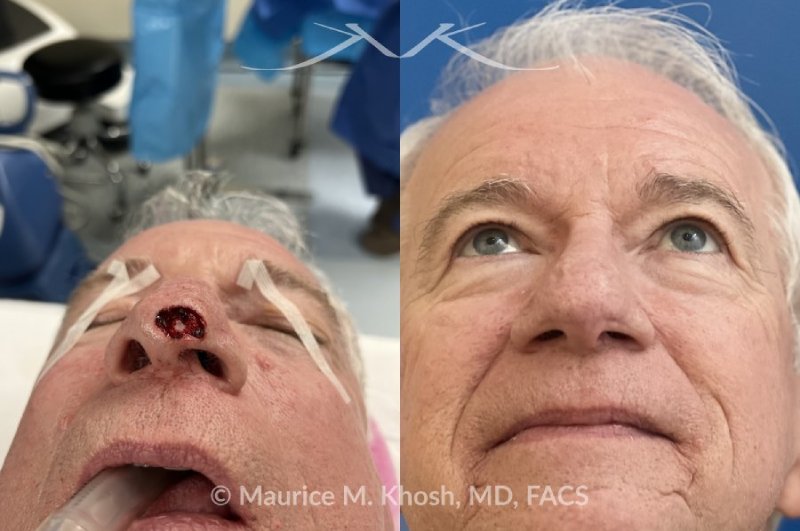
This is another example of a paramedian forehead flap that was used to repair a large nasal tip defect. In this case, cartilage grafting to the nasal tip was necessary.

Skin Cancer Reconstruction: Nose Repair 3/4

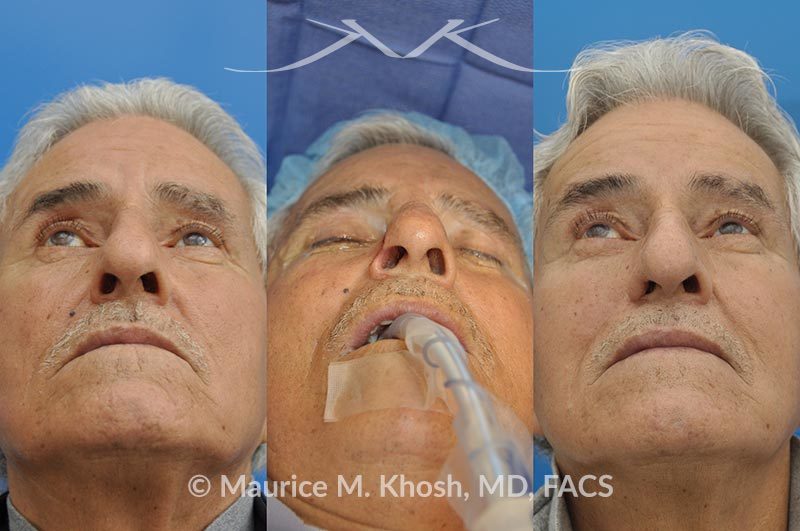
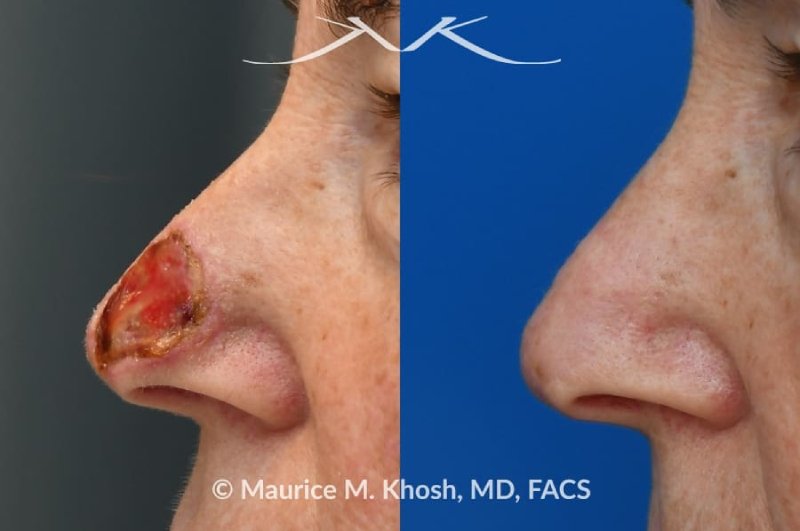
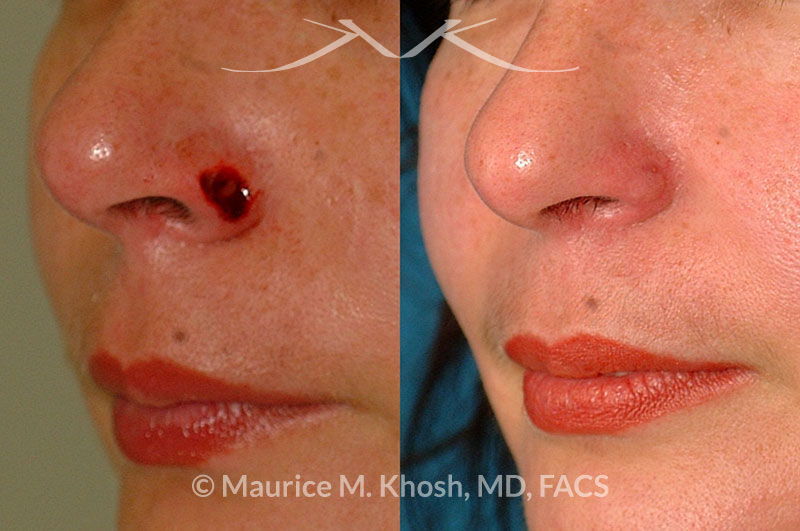
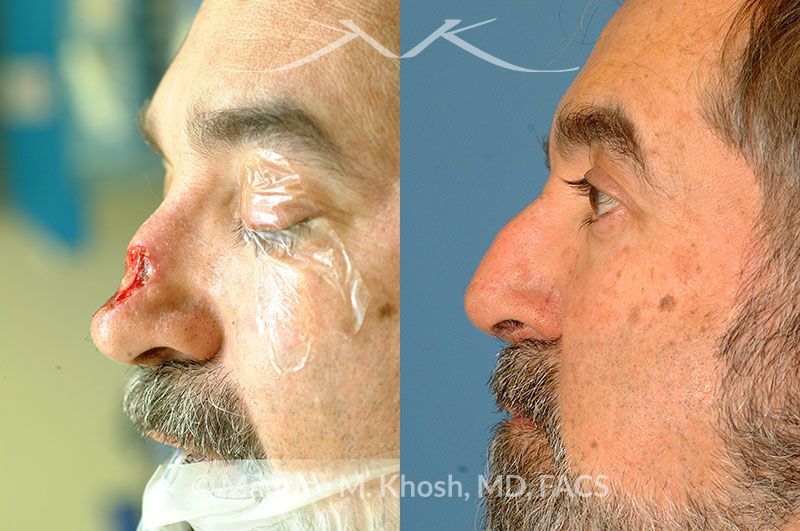
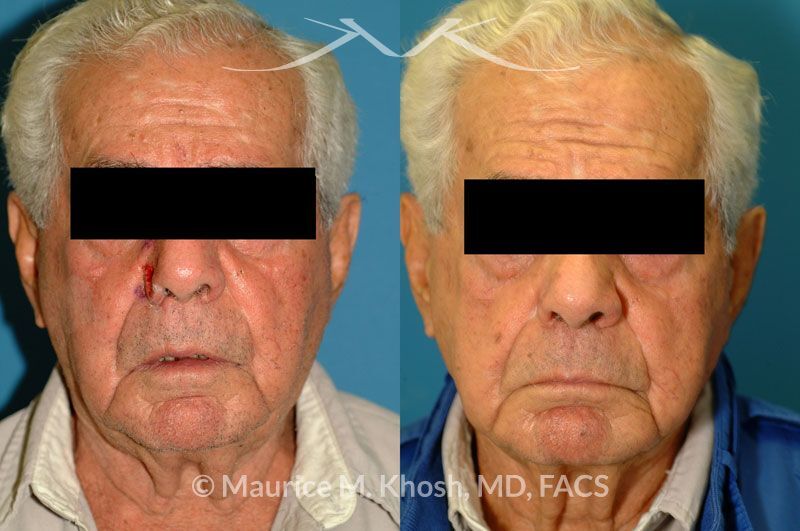
In cases where the skin defect is confined to the nostril rim, tissue flaps from the medial cheek (melolabial flap) work extremely well. The melolabial flap is preformed as a two-staged flap, like the forehead flap. The following patient had a basal cell carcinoma excised by Mohs’ technique with a resultant deep nostril rim defect. The melolabial flap was used with outstanding results.

Skin Cancer Reconstruction: Nose Repair 4/4

Since there are usually multiple options available for repair of each nasal defect, Dr Khosh uses such considerations as the general health of the patient, defect size and depth, and tissue availability from various donor sites, in arriving at the most suitable reconstructive option.

Cheek Reconstruction, Cheek Repair:

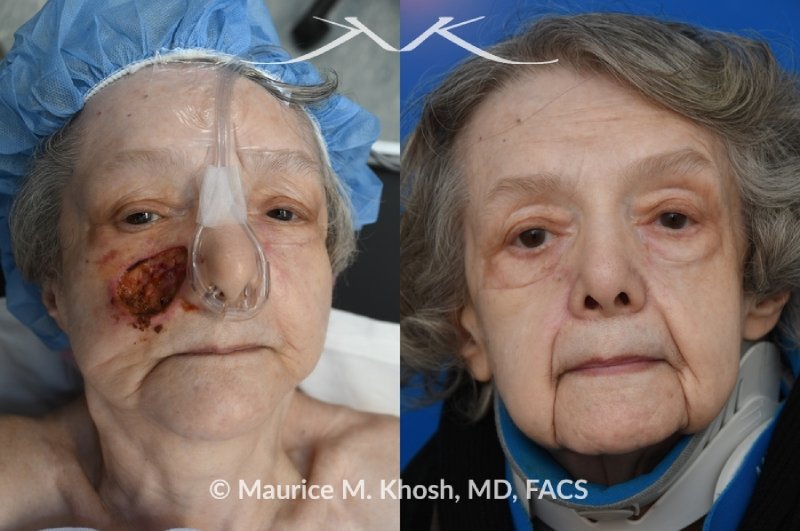
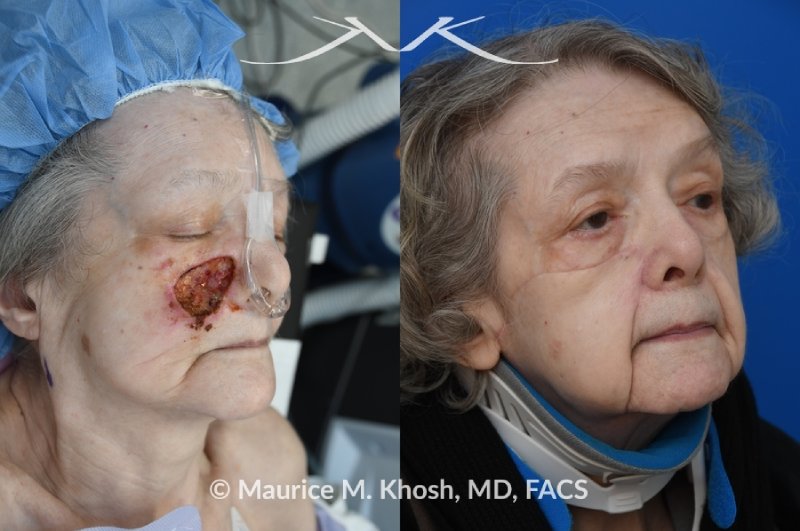
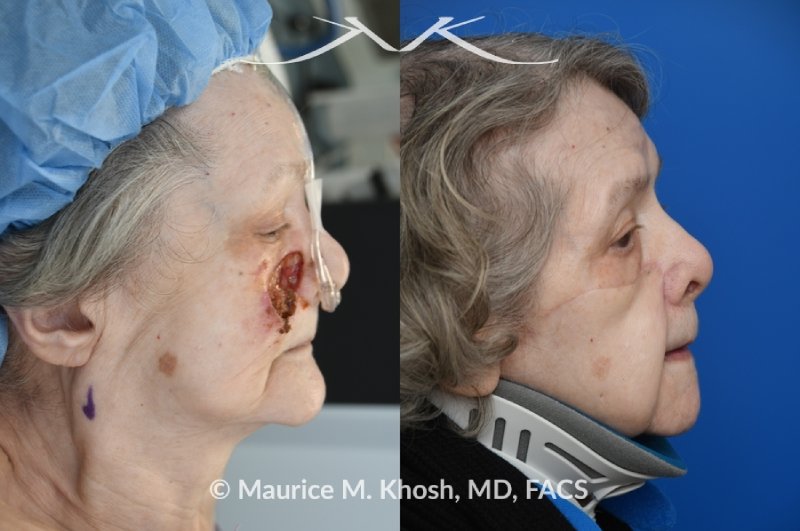
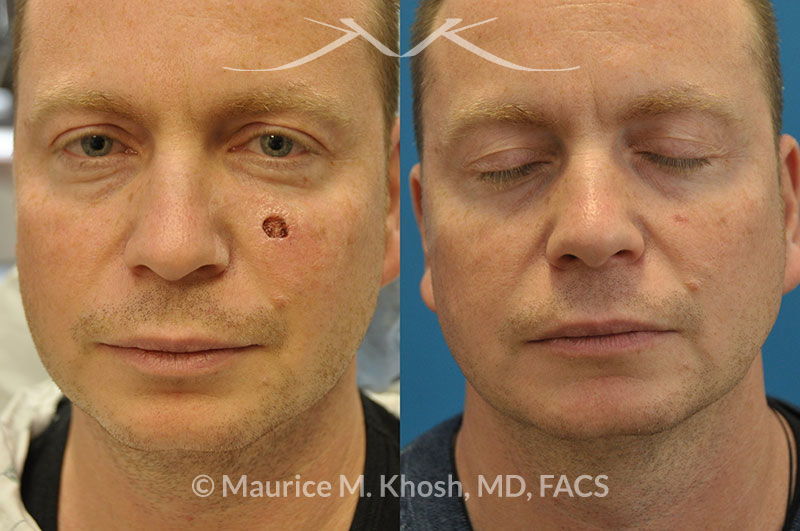
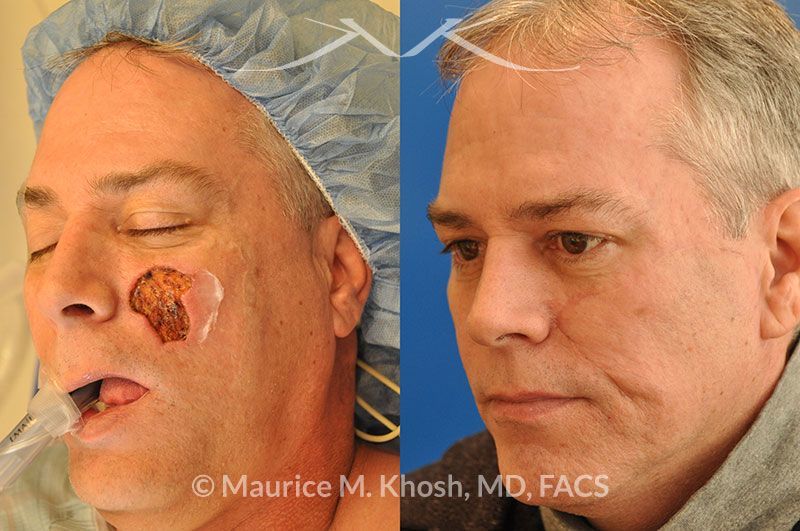
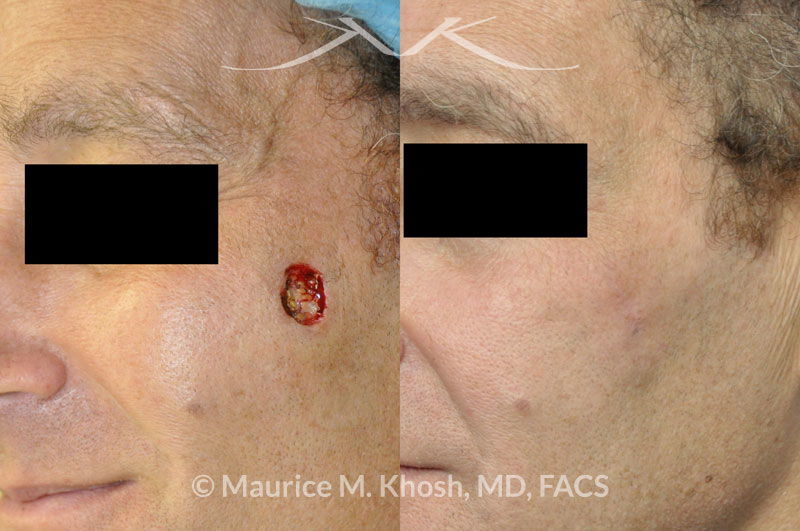
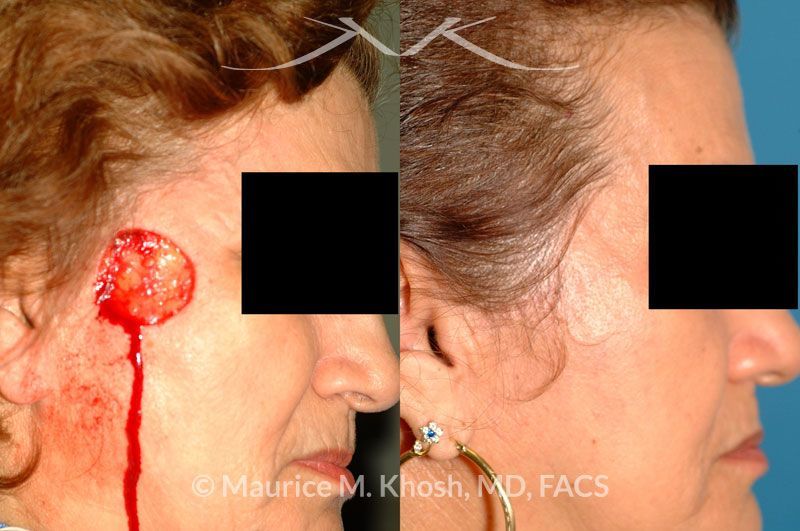
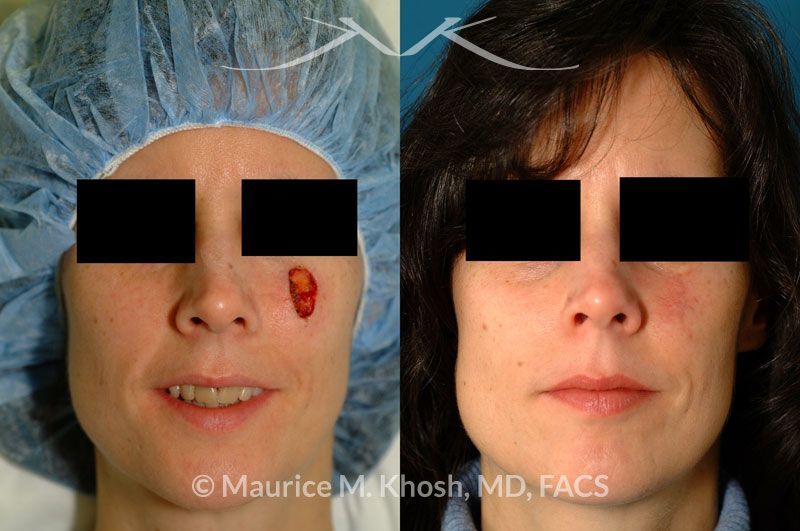
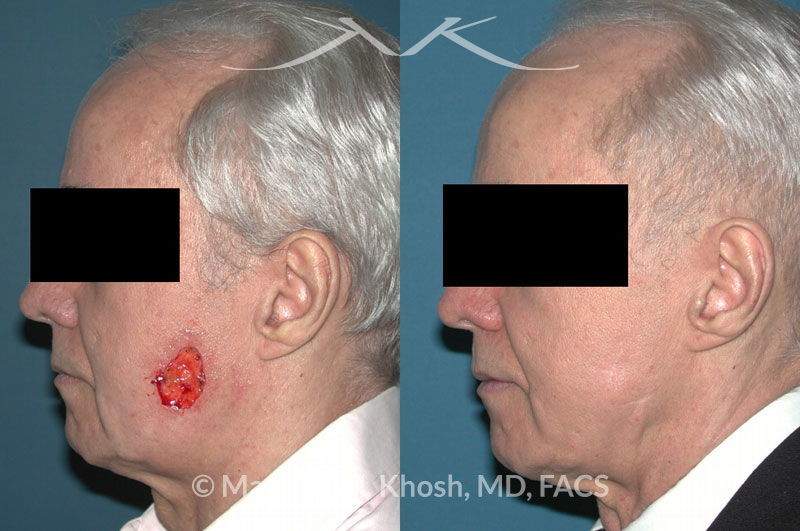
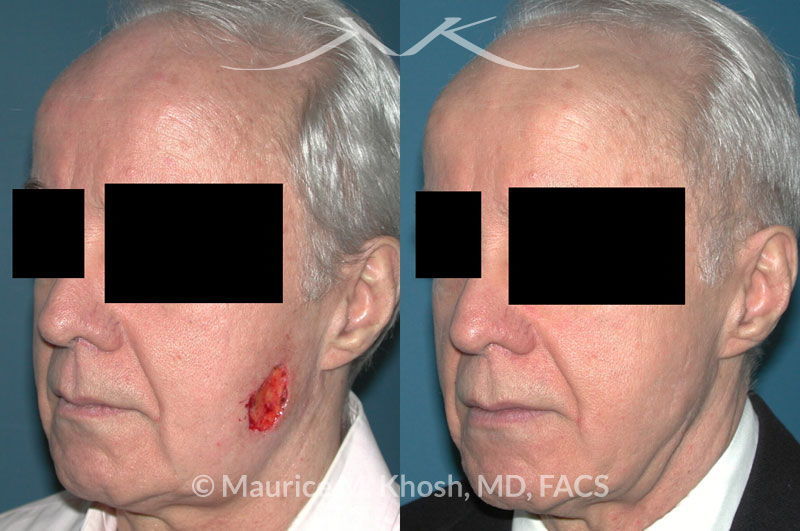
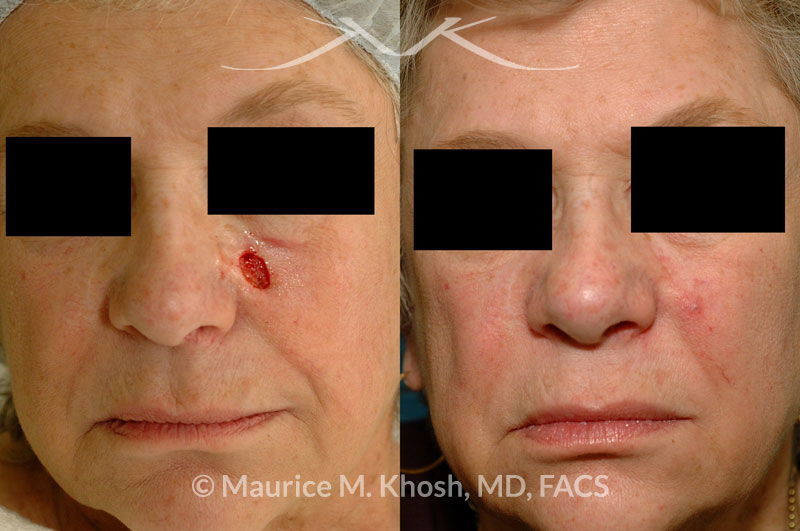
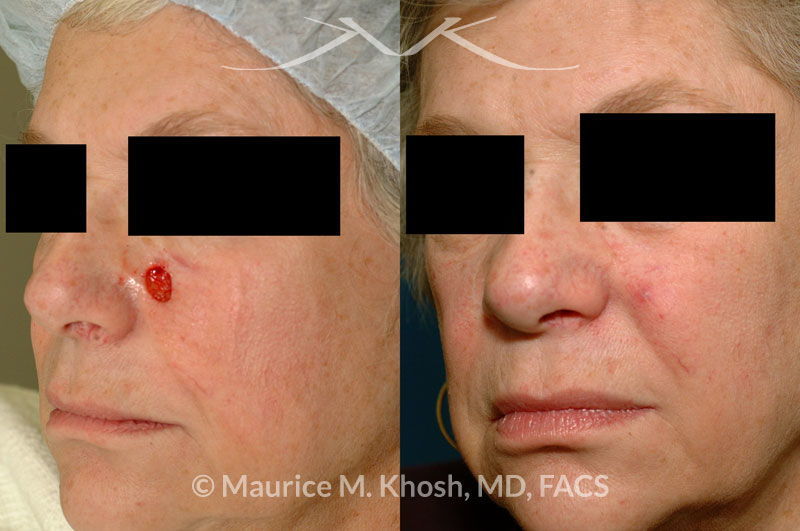
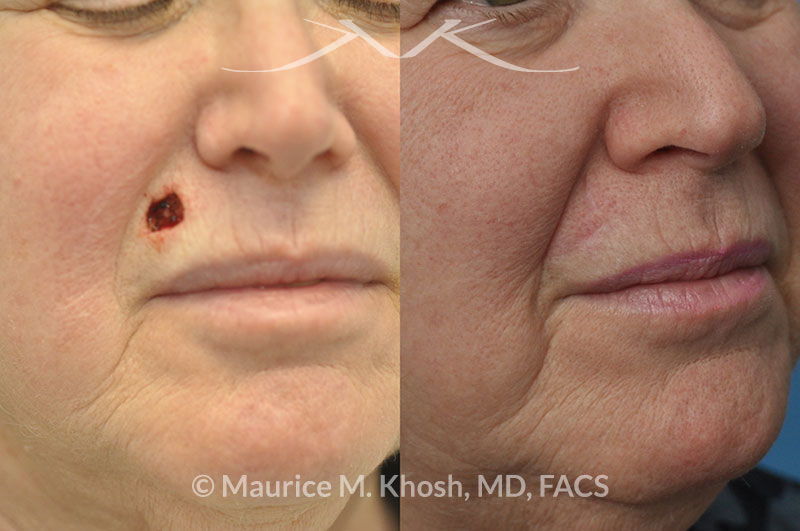
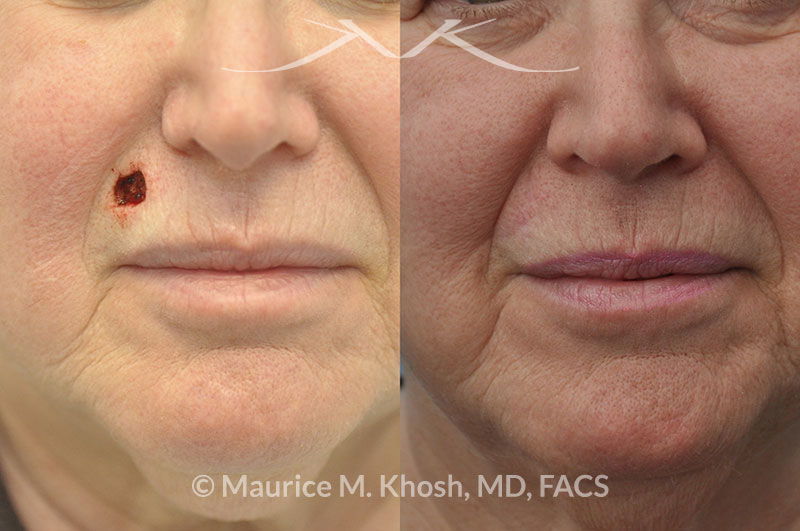
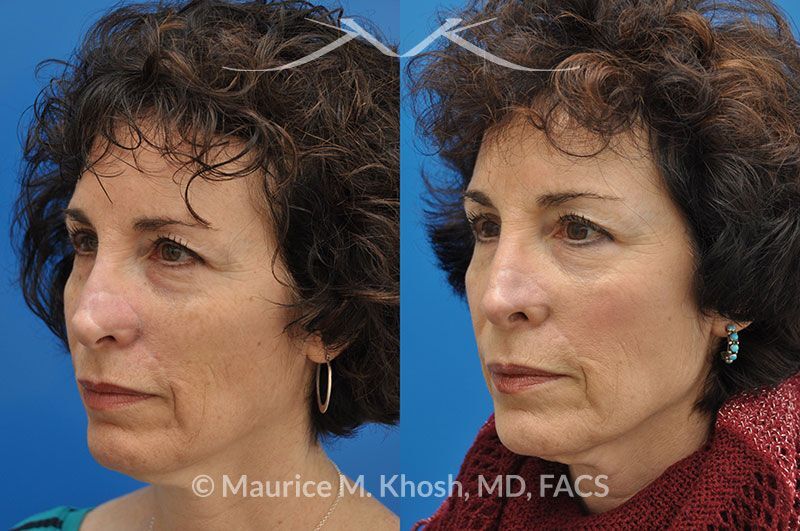
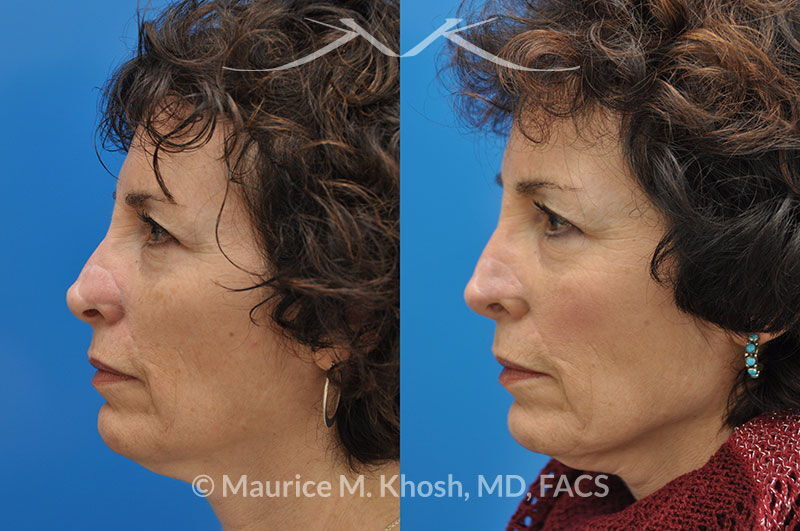
Due to presence of plentiful and elastic tissue in the cheek, most defects can be repaired with advancement and rotation of adjacent skin. The following case is an example of a mid cheek defect which was repaired with an advancement technique known as O to T closure.


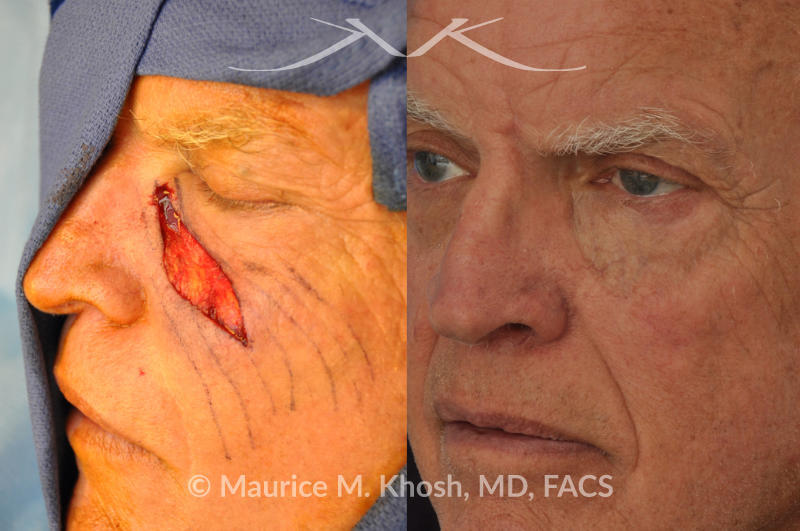
Cheek defects, close to the nose, can be easily camouflaged in the nasolabial fold (the crease between the nose and cheek) as demonstrated in this patient.


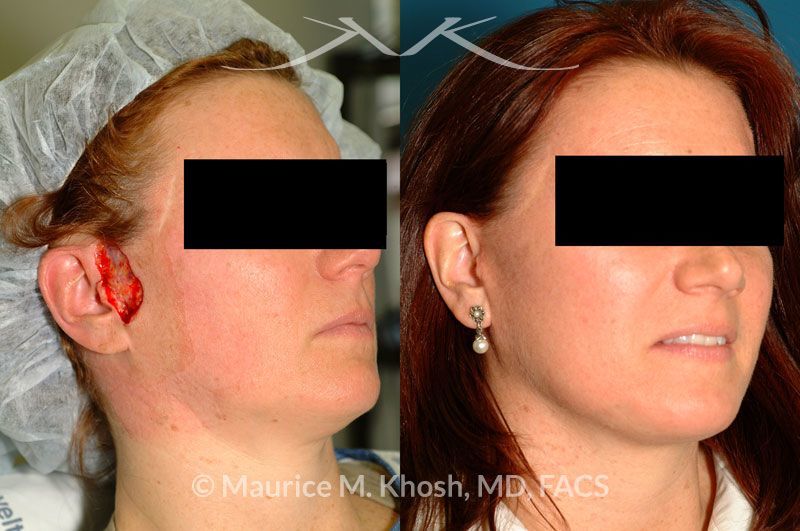
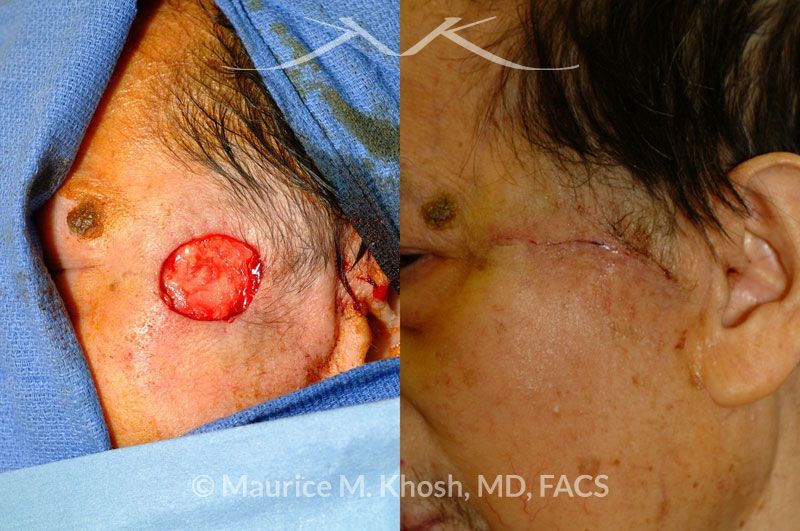
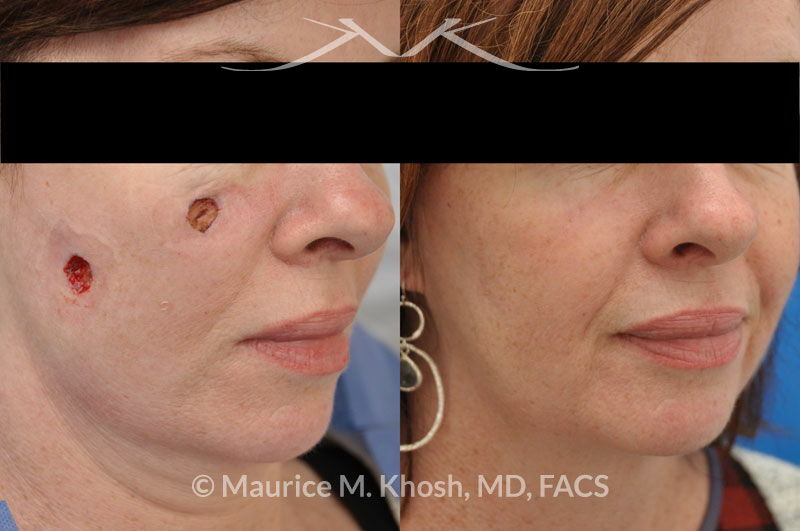
Cheek defects, close to the ear, can be approached through a facelift incision. The cheek tissues are elevated as in a facelift, and skin is closed hidden inside the ear. The following patient had a recurrent cancer in the lateral cheek and underwent Mohs’ surgery. In this case a facelift flap provided enough tissue for coverage of the cheek defect.

Skin Cancer Reconstruction: Ear Repair 1/3

Ear Reconstruction, Ear Repair:

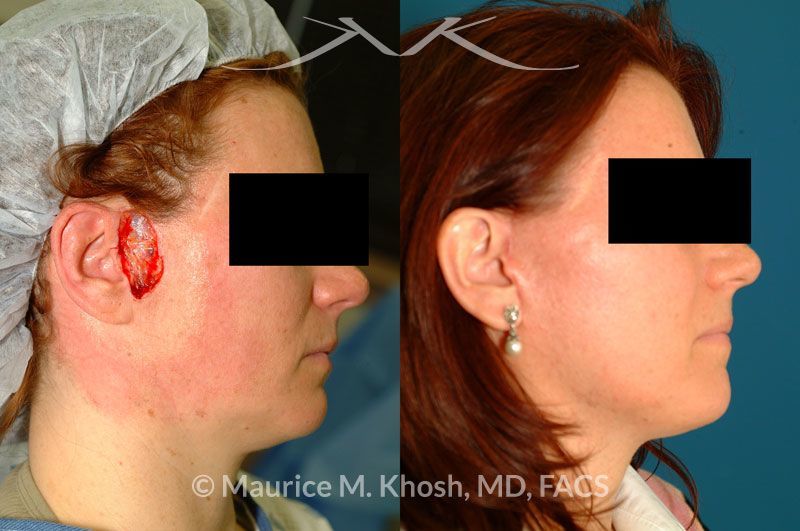
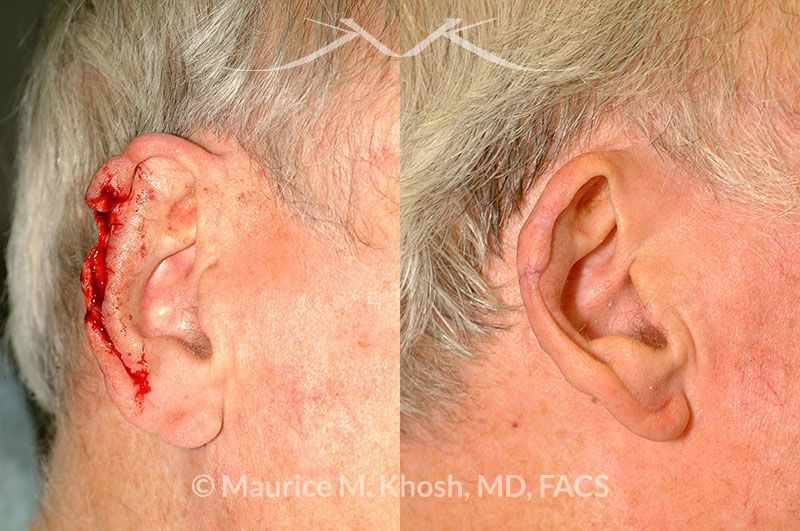
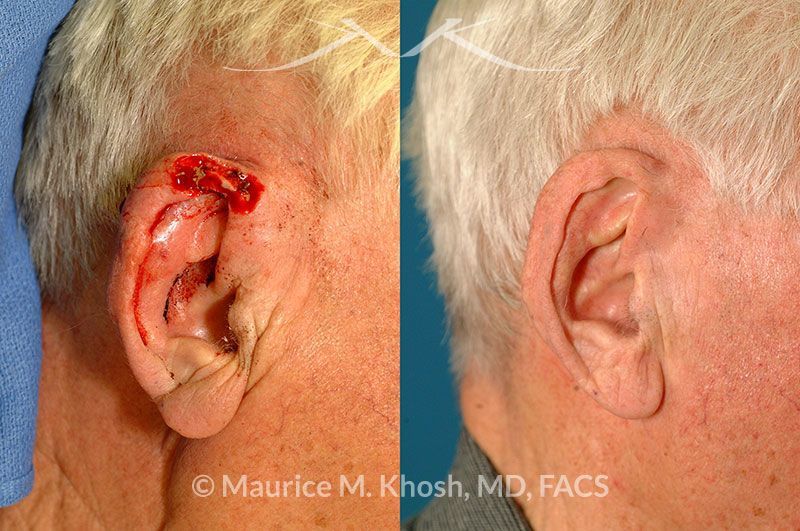
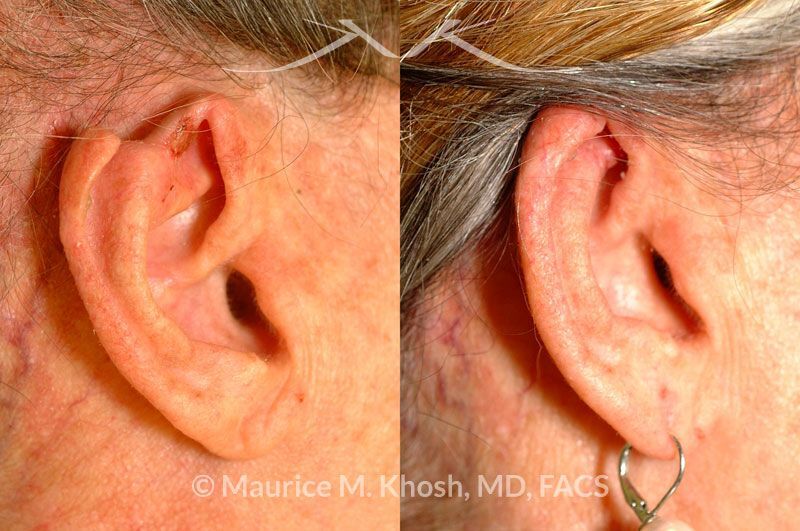
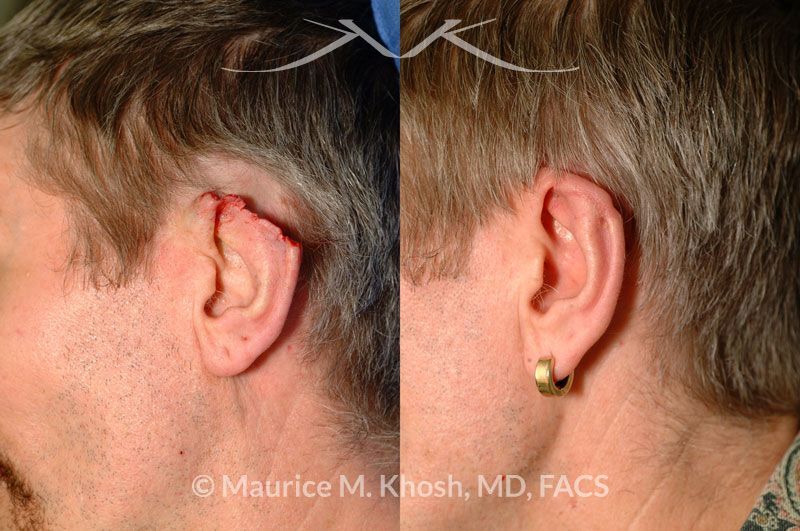
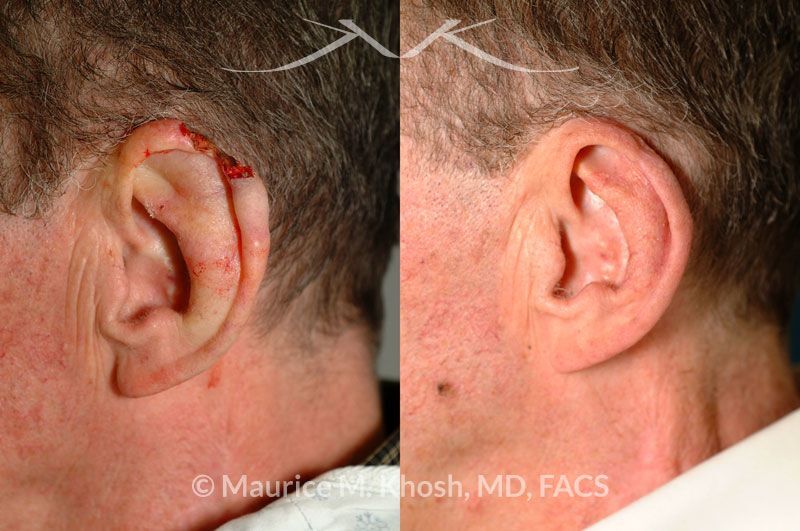
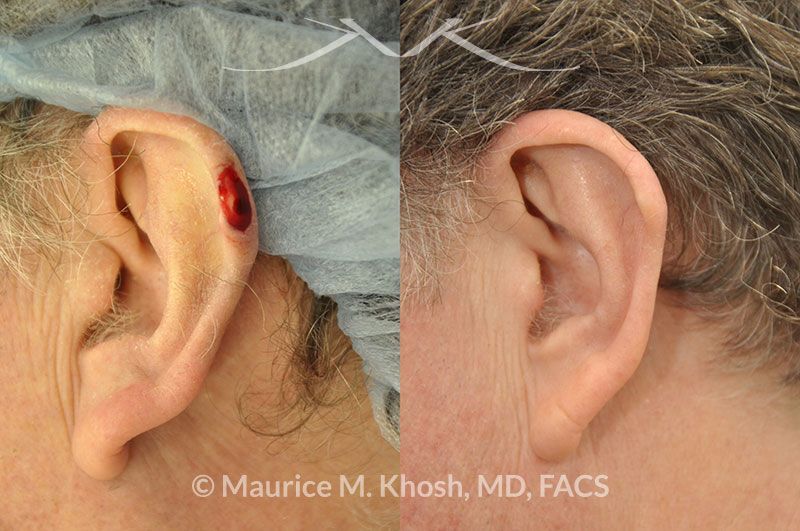
The majority of skin cancers affecting the ear involve the helical rim (the outer rim of the external ear). In repairing helical rim defects, adjacent skin and cartilage can be advanced to repair the defect. This technique reduces the size of the ear by necessity. However, since both ears are almost never seen simultaneously, the size discrepancy is of no significance.

The following case represents a lady who had undergone excision of a basal cell cancer from the upper pole of the helical rim five years previously. The defect was never reconstructed. She sought consultation with Dr Khosh for delayed repair of her ear. Following the repair, she was no longer self conscious about exposing her ear and felt more confident.

Skin Cancer Reconstruction: 2/3

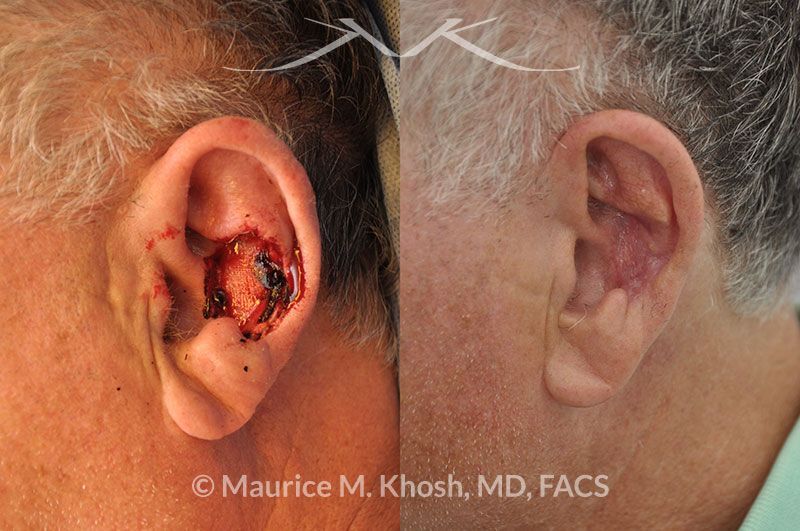
When helical rim defects involve more than 40% of the circumference of the ear, helical rim rotation-advancement flaps cannot be used as a reconstructive alternative. In such cases, skin from the scalp behind the ear can be moved unto the ear to cover the defect. This is a representative example of such procedure.

Skin Cancer Reconstruction: 3/3

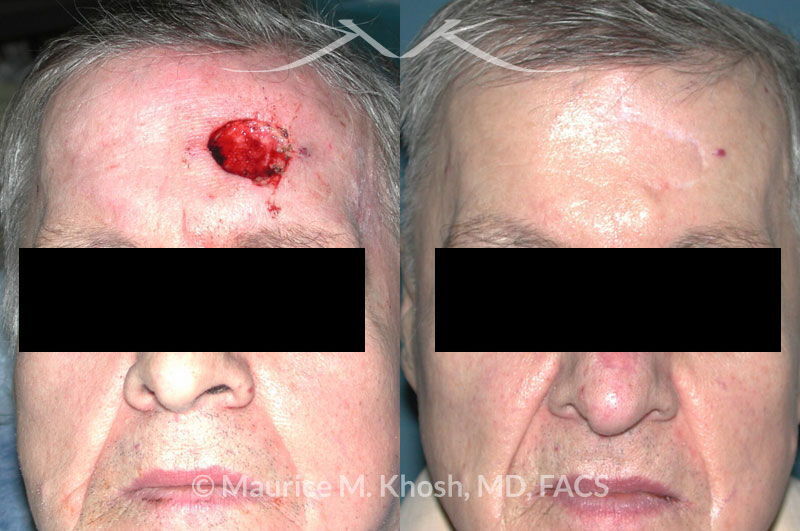
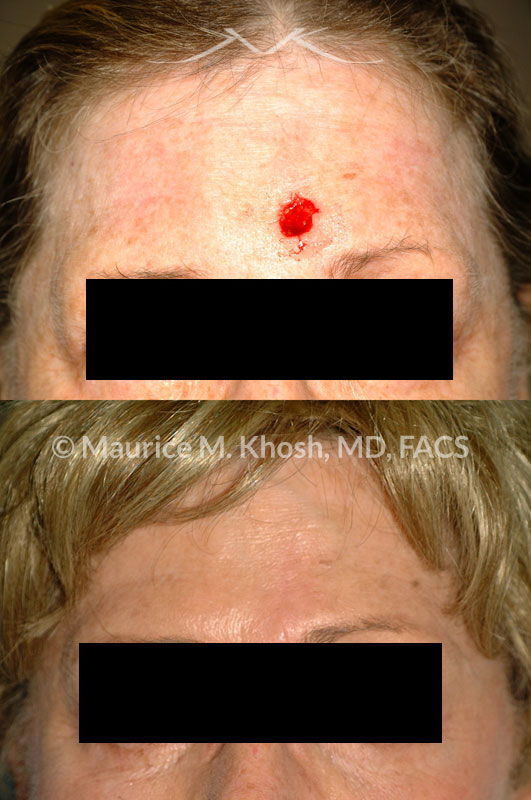
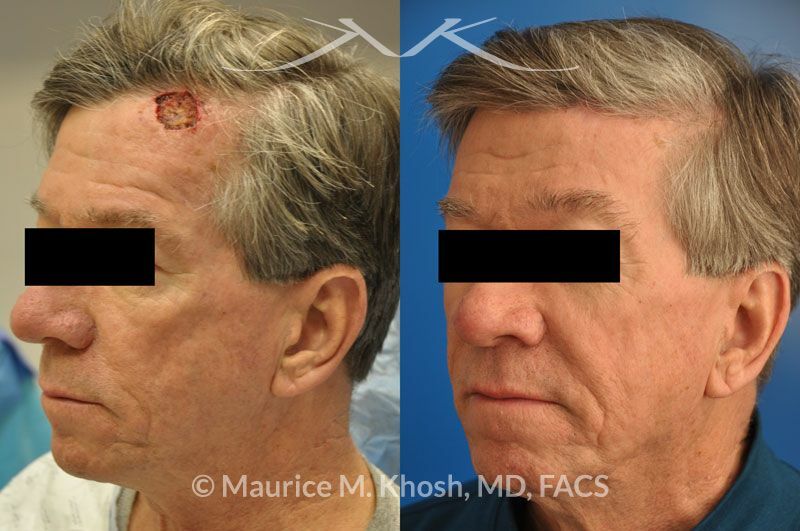
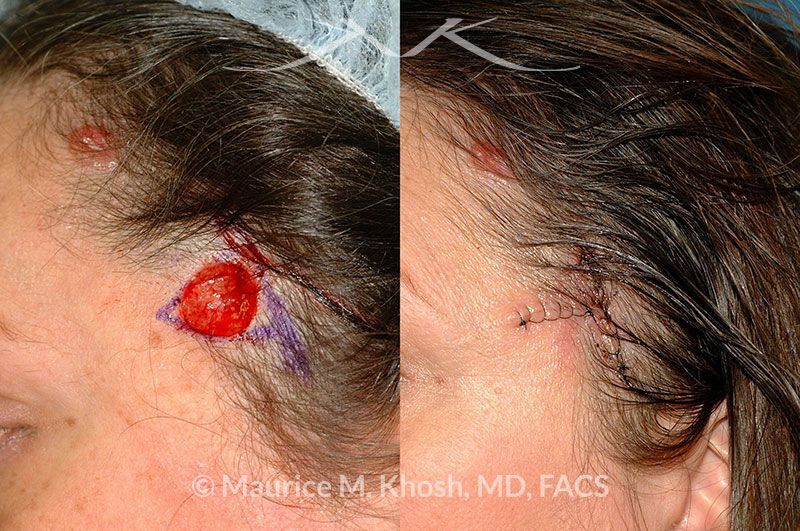
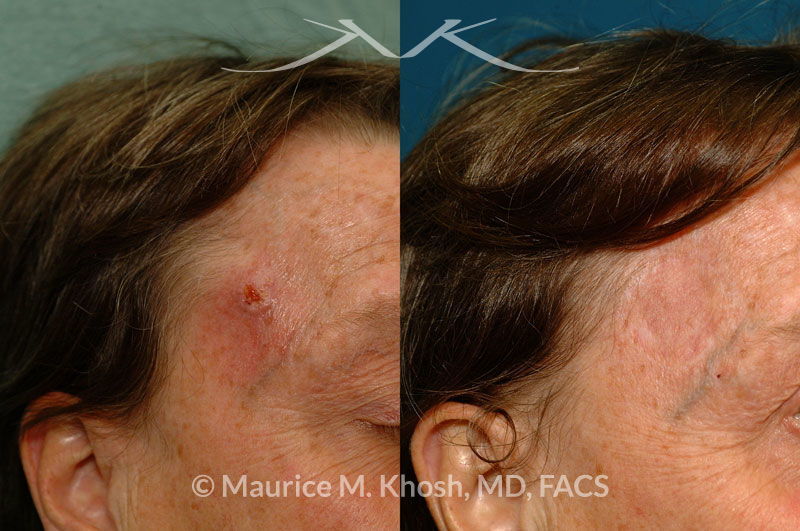
Forehead reconstruction, Forehead repair:

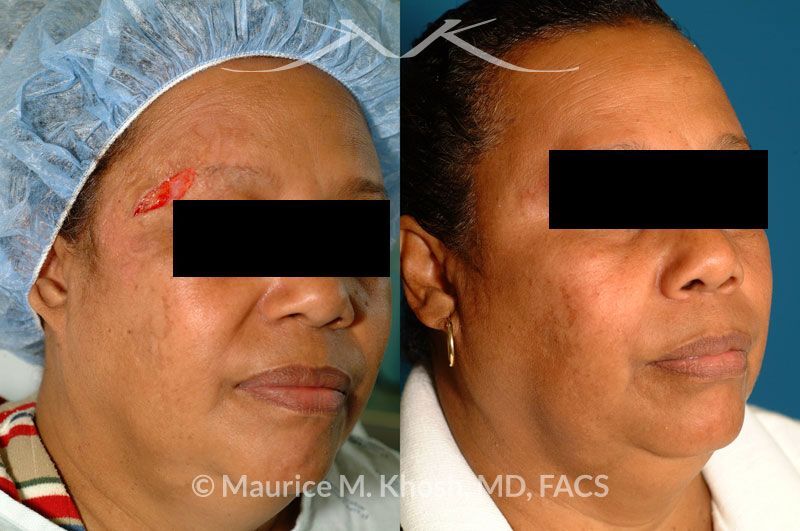
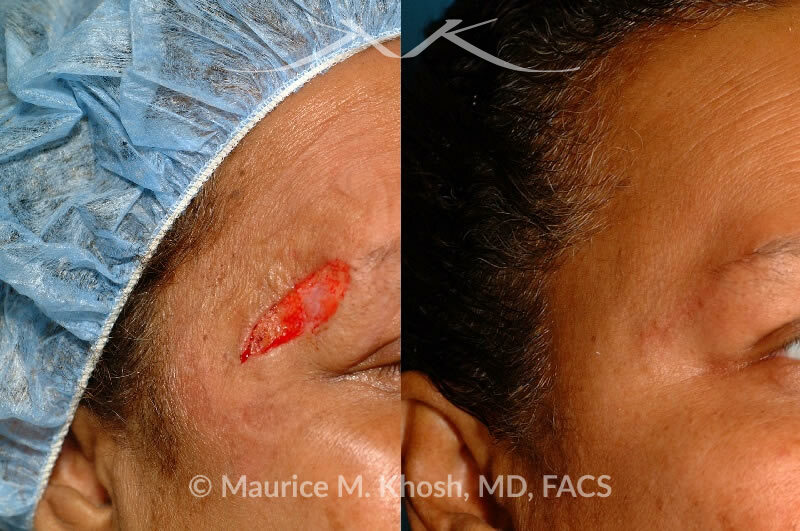
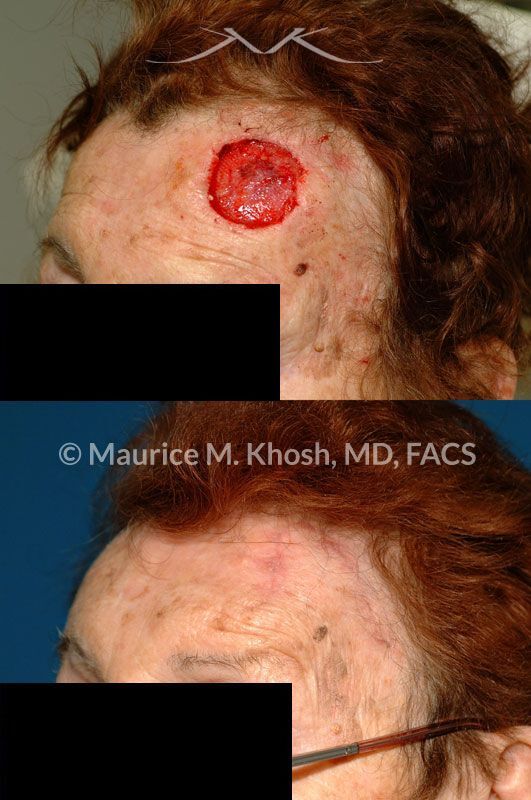
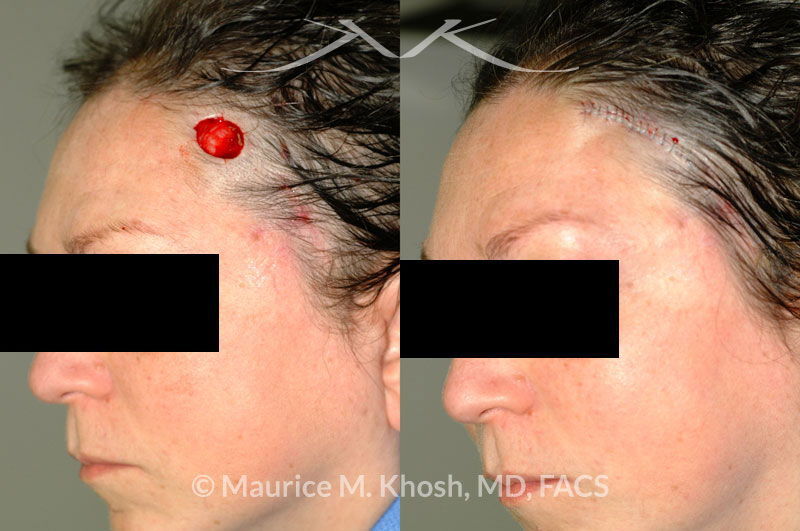
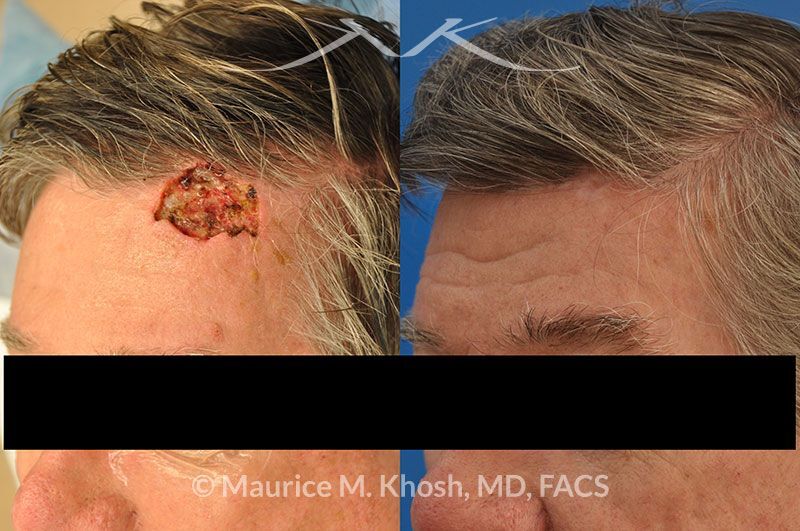
The forehead is a highly visible part of the face, bordered by the hair bearing scalp above, and eyebrows below. In order to minimize visibility or reconstruction in this area, Dr. Khosh aims to hide any incisions within the hairline, or along the natural horizontal creases in the forehead.

Skin Cancer Reconstruction: Forehead Repair

Scalp Reconstruction, Scalp Repair:

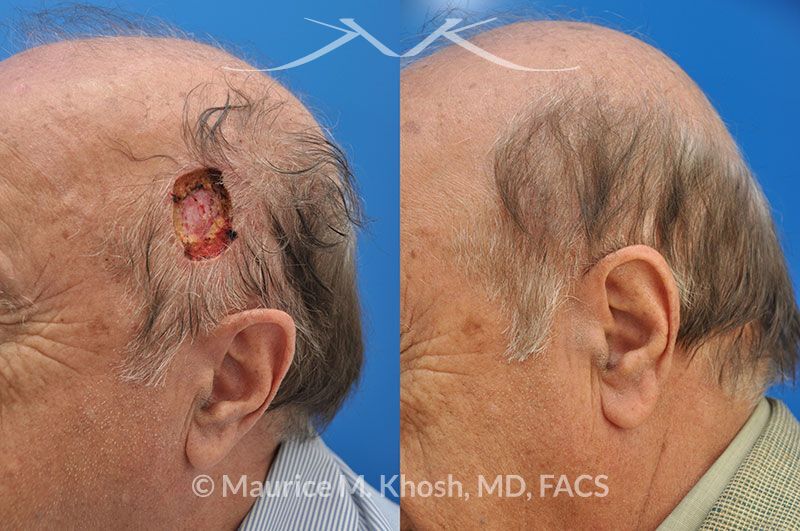
Scalp skin is very different from the skin of the rest of the face. The skin is hair bearing, thicker and tighter, and therefore more difficult to move when planning a flap repair. Relative to the rest of the face, scalp repair requires larger and longer flaps.
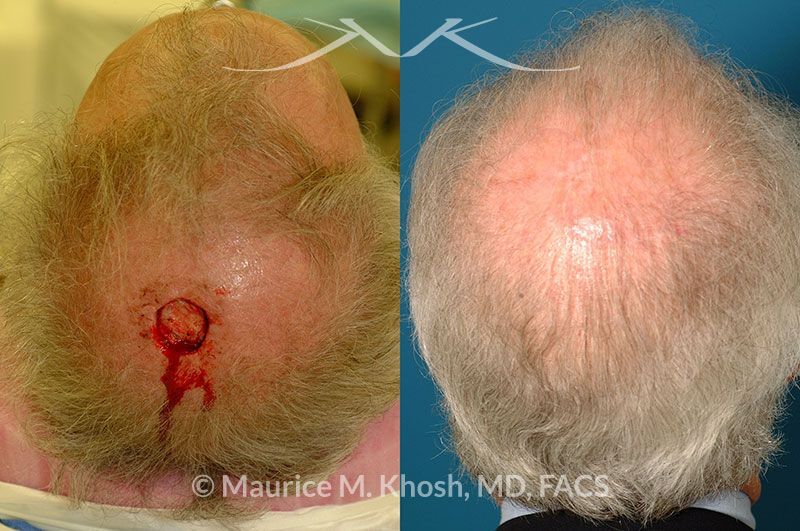
The following patient had repair of a medium sized scalp defect with large bilateral flaps. When the scalp defect is much larger, techniques such as tissue expansion need to be utilized to provide an ideal outcome.

Skin Cancer Reconstruction: Scalp Repair

Skin Cancer Reconstruction: 212-223-1333